
Kazimierz is a nation of knights. But the place those knights level their lances has long since ceased to be the battlefield—it's the arena, glittering with money and advertising.
And here is one knight who has laid down his sword: a man who wanders the Kazimierz countryside alone, with no retainers, no armor, and not even the will to use his own blade.
This is the story of the few days leading up to the last time he drew his sword.
A knight who won't use his sword, yet brought the sword along
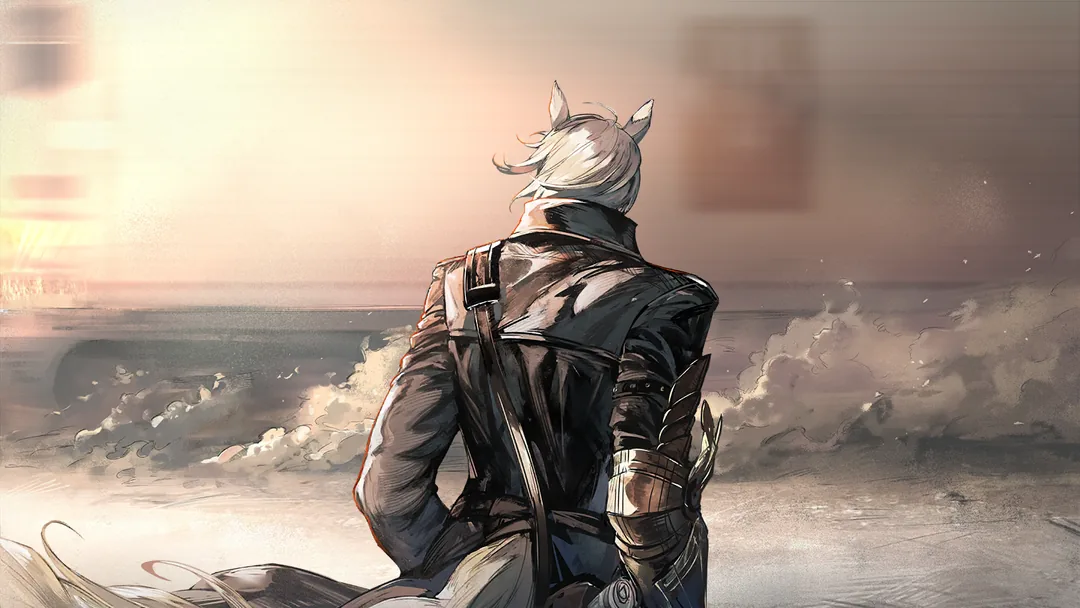
Late autumn, in a rural village of southern Kazimierz. Młynar is a member of the Nearl family and uncle to the 'Radiant Knight.' He withdrew from the battlegrounds of the powerful long ago, so there's no one left to count him as an enemy anymore.
An old man in the village recognizes him: a former teacher who fled Leithanien, cut off his own horns, and spent twenty years in hiding. He still remembers the kindness Młynar once did him, quietly slipping him in among a band of wanderers. Młynar himself doesn't remember it, though.
What Młynar is searching for is people—his brother and sister-in-law, who vanished fifteen years ago: the two missing Nearls. Without a single word of news, he retraces, one by one, the roads he once traveled.
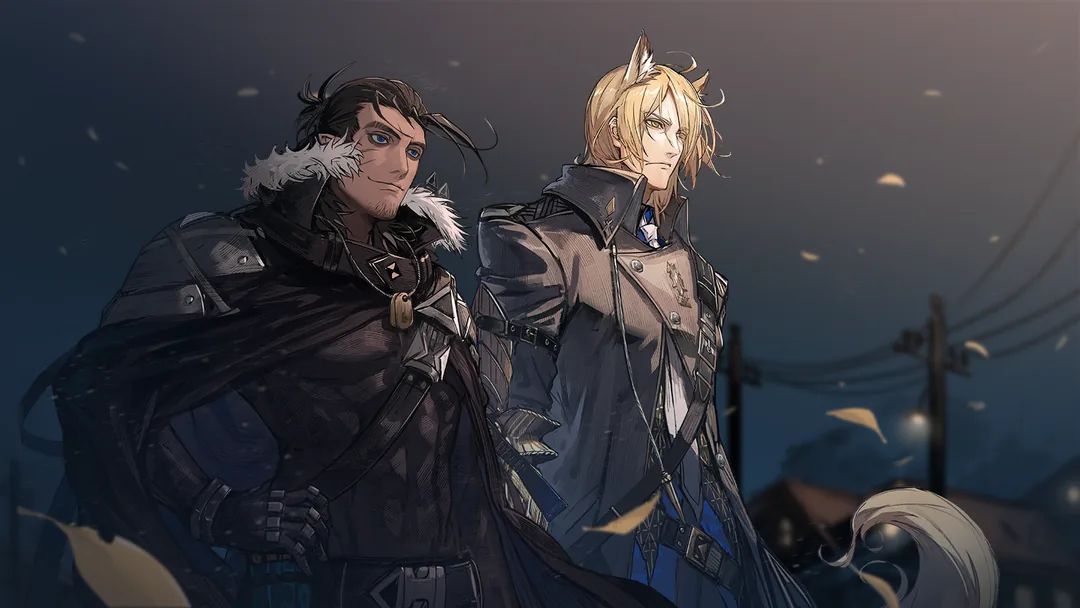
At the same time, on a hill overlooking a valley, two old friends meet. One is Toland, chief of a band of Sarkaz bounty hunters. The other is Tsishbor, commander of the silver-armored Expeditionary Knights. Both have known Młynar for a long time.
Tsishbor says he's investigating the raids troubling the area, and warns Toland to stay well clear of Gale Industries. But what he really wanted to talk about was something else.
A few years ago, Selina—a knight Tsishbor loved—was falsely accused, dragged off to the Grand Knight Territory, and killed. At the time, he wrote to Młynar begging for help, but no reply ever came.
Toland asks cautiously: does he want Młynar as an ally, or… does he want revenge?
A lawyer who came to fleece the village saved it instead, then left
A companion falls in with Młynar on his travels: Deschi, a high-flying lawyer with an undefeated record in the Grand Knight Territory. When her rental car breaks down, she ends up relying on Młynar to guide her.
The job she's taken on is to stand with Gale Industries and beat down the relocation compensation owed to the villagers of Raystone, who are about to lose their land. She crushes the village's lawyer, Ham, with sheer logic, and wrangles a settlement for a truly rock-bottom sum.
But when night falls, Deschi grows strangely quiet. Looking up at a star-filled sky for the first time in ages, she remembers her rookie self, who once vowed to uphold the dignity and fairness of the law.
And the next day, she quietly 'loses' a document to Ham: the decisive proof that Gale Industries' land contract was void in the first place. The lawyer who was paid a million marks to fleece the village had just handed the village its winning card.
When Ham asks why, Deschi laughs. Not because she's some great person, she says—just because she'd like to keep drinking this village's beer in the future. Then she quits her job and heads for Zbonek.
The man who confessed to starting the riot was with us that day
The Zbonek that Młynar heads toward is an old fortress city on Kazimierz's southern border. Lately, Infected riots have been breaking out one after another at the construction sites of its new district.
The news names an Infected foreman called Zeno Shelvin as the ringleader. He turned himself in, they say. But two people simply can't believe it: Flametail and Ashlock, two knights from Pinus Sylvestris who now work for Rhodes Island.
When the riot broke out, Zeno was with the two of them—in fact, it was Zeno who rescued the pair from danger. There's no way he's the culprit.
Only after Młynar persuades Gale Industries to drop the charges and the two knights spirit Zeno away does Zeno finally speak. He says an Expeditionary Knight asked him to take the fall for the riot—and that he needed the money for his family.
Pin the crime on a single Infected, let the press stoke the fear… someone was painting a bigger picture in this city.
An actor in fake armor becomes a real hero
That night, an explosion tears through an abandoned street in Zbonek. In a slum where shipping containers are stacked like mountains, children are buried under the rubble.
There's a man with a past on this street: Shevchik, a retired arena knight once known as 'the Plastic Knight.' Because he wore plastic armor he made himself instead of taking corporate sponsorship, he now hides his identity and lives quietly with his family.
As it happened, his son had been playing on that very street, and Shevchik plunges into the flames to find him. In the end, he saves more than twenty children and becomes a 'righteous man' who refuses to give his name.
But when his son says he wants to become a knight just like his father, Shevchik flatly refuses to allow it—the more beautiful the dream, he says, the more it will disappoint you.
Meanwhile, saving children amid those flames, Młynar comes face to face with a noble who had come from Leithanien—someone who, envious of Kazimierz's vitality, had come to see the slums for himself in hopes of reforming his own domain.
In a room the two of them finally break into, a shattered communication device is still leaking sound—military intelligence about preparing for war with Leithanien.
The Leithanien noble, who heard those words right alongside him, goes white as a sheet.
Someone believed this city needed a war
Late that night, Młynar and Toland piece together the scattered fragments.
A land contract signed without any authority by the son of the dead noble Marek; the knightly order standing behind it; Gale Industries, which recruited the Infected and bribed the press to stage the riots. All of it was aimed at one thing: kindling the sparks of war between Kazimierz and Leithanien.
At tomorrow's opening ceremony celebrating friendship between the two nations, the Leithanien noble would be killed. That was the final scene of this plan.
And the one directing all of it was Tsishbor.
But Młynar's own sword wasn't in his hands—Tsishbor had taken it to a knightly order's craftsman under the pretext of having it serviced. So the knight who had laid down his sword borrows another man's blade to go and stop his old friend.
He won a duel he didn't want to win
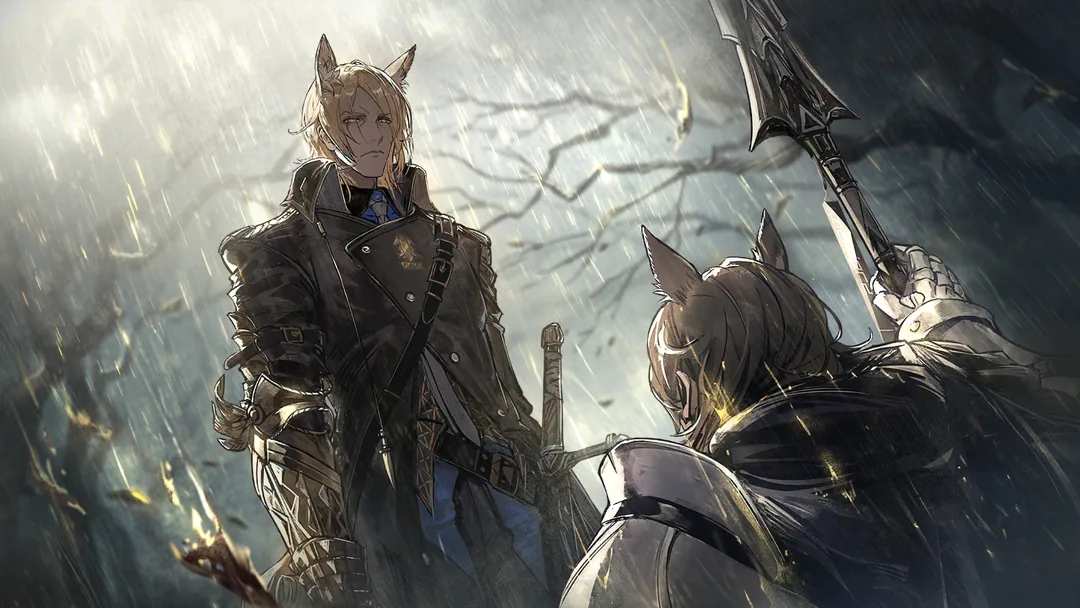
The dawn of December 1st. Abandoned even by his own subordinates, Tsishbor sets out alone to kill the Leithanien noble. And Młynar steps in to bar his way.
The duel in the rain was really a conversation. Tsishbor keeps asking Młynar: how, after seeing all this rot, could he not draw his sword? When he could have saved Selina, why did he not even spare her a glance?
A knight must never bow his head to power. But neither should he refuse to kneel before the suffering of others.
— Tsishbor
Młynar refuses to grant his conviction any validity. A creed that stakes one's life like a wager, even knowing there is no hope, can change nothing at all.
In the end, Młynar wins. But he sheathes his blade—he didn't want it to end in death like this; he only wanted Tsishbor to stop.
But Tsishbor asks in return: to whom would Młynar have him say he lost? To the nobles and their base scheming, to the merchants peddling a false peace…? He says he will accept defeat at Młynar's hands, and his alone.
And just before he falls, Tsishbor hands Młynar the answer he has waited twenty years for: that a few years ago, when he had slipped into Leithanien, he happened to meet the two missing Nearls.
When Młynar asks whether he told anyone else this, Tsishbor slowly shakes his head. Then, leaning on his lance, he falls as silent as one of the countless empty suits of armor he has seen out in the wilderness.
Młynar kneels in the rain and pays a knight's respects to the one who once walked the same path as him.
He sets out to find people he may never find—and goes anyway
The case was dug up. Countless corporations and old noble houses were implicated, and even a verdict that could not be overturned years ago was reopened. But by now, neither those who committed the crimes nor the people who remember what happened are much left.
Meanwhile, back in the Grand Knight Territory, Margaret is little by little learning the weight she must bear as the Nearl family's 'Radiant Knight'—visiting the grave of her grandfather Kirill, and standing up to the threats of the merchants who take aim at her. The old craftsmen talk of the long-gone Snitz and Młynar, wondering where the two Nearls might be now.
Toland hands Młynar an invitation from Rhodes Island—it seems the Doctor there has something to say about his brother and sister-in-law.
Młynar sets out once more to find the two people about whom there is still not a single word of news—even as Toland teases him that it's a hope with nothing to stand on.
Even if I added up all the hope I held in the Grand Knight Territory across ten whole years, it would come to no more than this.
— Młynar
And so the knight who had laid down his sword departs once again in search of his vanished family. Every road already points to its destination—but what he seeks lies beyond those roads.