
This is a tale of a remote mountain backwater in the northwest of Yan, so far off that not even the mobile cities reach it. Catastrophes gnaw away at the land, and its people scrape by day to day, their lives entrusted to the mountains and the sky.
On one such mountain path, a swordswoman corners a fleeing boy at the edge of a cliff. The boy blusters that he is the boss of a bandit gang called the 'Shanhai Gang,' but he turns out to be no more than a kid barely in his teens.
But from the boy's torn pocket fall an old protective talisman inscribed with 'Moxian Village' and a house key. The swordswoman makes up her mind: she will take this child home—without any idea what kind of village it is.
The runaway 'boss' who left to make a name for himself—and reports his rescuer as a kidnapper over a single meal
The swordswoman's name is Qiubai—a wanderer of the jianghu whose name means 'vengeance and snow.' Her martial skill is formidable, yet she never takes what belongs to others and always pays in full for what she buys.
The boy's name is Bang Dolsoe. He is the son of the one household in the village with a different surname, and three years ago he left home vowing to become a 'renowned knight-errant.'
Their journey home is an utter mess. Bang Dolsoe secretly slips an inn clerk a note saying he's been 'kidnapped' to summon the guards, then bolts off under the excuse of a bathroom break. Yet as she chases when he flees and he hides when she fumes, the two spend two weeks together and, oddly enough, fall into perfect sync.
When a Duskbeast attacks out in the wastes, Qiubai takes a claw across her body shielding the boy behind her. Bang Dolsoe offers a salve his father taught him to make and, fearing she won't trust it, cuts his own arm to demonstrate it on himself.
At the pass leading into the mountains, the two spot a gray road—a Chidao, one of the highways Yan lays down in lands the mobile cities cannot reach. Whenever a Catastrophe brings it down, it is built again and again, and Qiubai remarks that few people realize someone is out there endlessly keeping up that work.
Bang Dolsoe keeps asking: why did she bother saving him, why does she keep trying to send him home? Qiubai answers curtly—a child with a home to return to is better off there than wandering the wastes alone. Even as she says it of herself, 'I no longer have a home.'
A homecoming after three years—and yet a fresh grave stands at the village gate
The boy's hometown is Moxian Village, a poor mountain hamlet said to have been carved from the mountains by an ancestor wielding a single hoe a thousand years ago.
But the villagers react strangely at the sight of Bang Dolsoe. 'You... you're alive?'—not with joy, but with dread. They scatter as if fleeing, saying they must tell the village head.
At the village entrance stands the relocated ancestral shrine, the Yishan Shrine, and beside it a freshly made grave. Not knowing whose it is, Bang Dolsoe bows his head to it in respect.
His father isn't at the house. Instead, the sick and hunched Hunter—Bang Dolsoe's father—pushes his way out through the crowd of villagers. Reunited after three years, father and son can hardly even meet each other's eyes.
The village's aged Chief Zhu Shun welcomes Qiubai warmly. Thanking her for bringing the boy home, he confides the village's plight: failed harvests, drought, and then torrential rains… It seems spring has yet to come to this mountain hollow at all.
But after a talk with the Hunter, the chief puts a strange request to Bang Dolsoe.
Dolsoe, my boy... for the sake of this village, couldn't you just once let yourself be a dead man?
— the Old Chief
The village that would pin a living boy's name onto the corpse of a child killed in a landslide
A few days earlier, beside a Chidao washed out by the downpour, the villagers found the body of a strange boy. Unidentifiable, the child was clutching a heavy box in his hands—a camera.
The chief had meant to report it to the authorities. But someone hatched a scheme: if they pinned onto this corpse the name of Bang Dolsoe—presumed dead these three years—they could pass it off as a death in the line of duty during Chidao construction and claim a hefty compensation payout.
The village was desperate—its irrigation, its seed grain, its stored food all run dry. The chief prostrates himself before the ancestral statue in the Yishan Shrine and prays, saying he never wanted to become a wicked man, that this truly was the only way left.
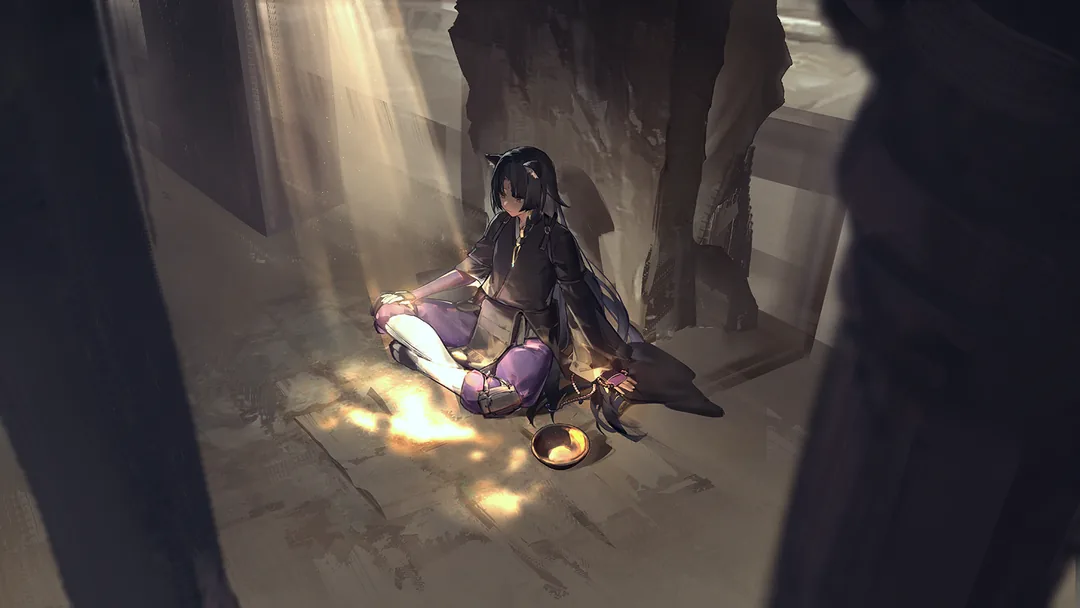
Just then, someone dozing against the statue opens her eyes—the wandering monk Saga. A cleric from Higashi, she is an odd sort who declares that 'karmic bonds make no distinctions' and addresses the clay statue as a 'benefactor.' She heard the chief's confession in full.
Meanwhile, Bang Dolsoe is locked in a storehouse. A village woman who brings him food tries to soothe him—what's the big deal about lending out a single name? But the boy will not back down.
I don't care how you people live. But I want to live like a human being!
— Bang Dolsoe
The father who said he was making a bow was really carving his son's gravestone
Qiubai, whom everyone thought had left the village, had in fact not gone—now that she had brought the boy here, she meant to see his safety through to the end.
She returns to the Hunter's house. He is whittling a piece of wood, claiming to be 'making a bow,' but Qiubai sees through it at once—it is no bow, but his own son's gravestone.
The father had believed his son already died out in the wastes three years ago. He'd planned to take the compensation money, leave the village, and set out to find him. And then, of all things, the son he'd thought dead came home alive.
At this point two more visitors arrive at the village: Mulberry, a member of the Chunken disaster relief squad, and the Messenger who travels these mountains alone.
Fearing their scheme would be ruined, the villagers even set hunting traps along the mountain path to stop the Messenger—only for Mulberry to let her through by sheer accident. Mulberry, who has come to investigate the cause of the debris flow, happens to discover on the mountainside the residue of homemade explosives and unfamiliar wheel tracks.
The day a gravestone left half-inscribed was cleaved in two by a single stroke of the sword
When the government inspector arrives a day ahead of schedule, the village scrambles. The Hunter is dragged out and made to stand before the grave, clutching his son's gravestone with its inscription still unfinished.
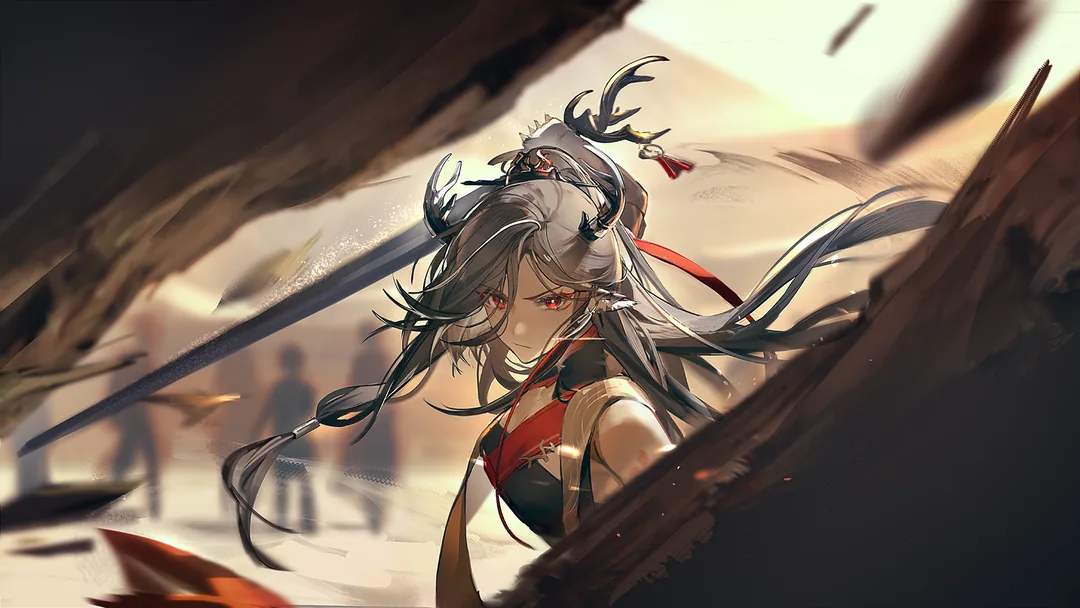
The instant the gravestone is about to be planted in the earth, the blade flashes—Qiubai has cut it clean in two.
In truth she had never trusted them from the start. And now she speaks of herself for the first time: how her father, a river pirate of Jiangji, was killed by government troops, and how she alone fled when the rest of her comrades were slaughtered. She, too, is a person without a name in this country.
A corpse, a name, money. Can your way of survival only be bought by trampling another person's dignity?
— Qiubai
And then, too late, a cruel piece of news arrives. The subsidy the village applied for two years ago reaches them on this very day. With that money, they'd never have needed to do any of this in the first place. In that moment, the chief felt as though the mountain said to have vanished a thousand years ago were bearing down on his shoulders once more.
And then word comes down from the mountain: Bang Dolsoe has... thrown himself from the cliff.
The father who insists 'Bang Dolsoe must not be alive,' and the son who flings himself from the cliff
Up on the mountain, Qiubai had already subdued the two villagers driving Bang Dolsoe toward the cliff's edge. Between the Hunter, who arrived after her, and his son, one last conversation remained.
The father tells his son to lay down his name, stay in the village, and live in peace. The son begs him to leave for a mobile city instead, promising to learn martial arts and cure his father's illness. It is here that the father finally speaks of the mother who ran away: she had longed to leave this mountain and live 'a different life,' but passed away a few years ago—leaving behind, in a thin envelope, the money from her own death benefit, addressed to her son.
Even so, the father does not relent.
'Bang Dolsoe' is not allowed to be alive.
— the Hunter
The boy throws himself off. And as if the wind itself catches his back, Qiubai seizes him for a third time.
At that same moment, in the Yishan Shrine, Saga stops the chief as he clutches the last of the explosives and tries to take his own life—telling him not to flee into death, but to confess everything to the authorities.
An evil thought and an evil deed differ by but a single word, yet their consequences are as far apart as heaven and earth.
— Saga
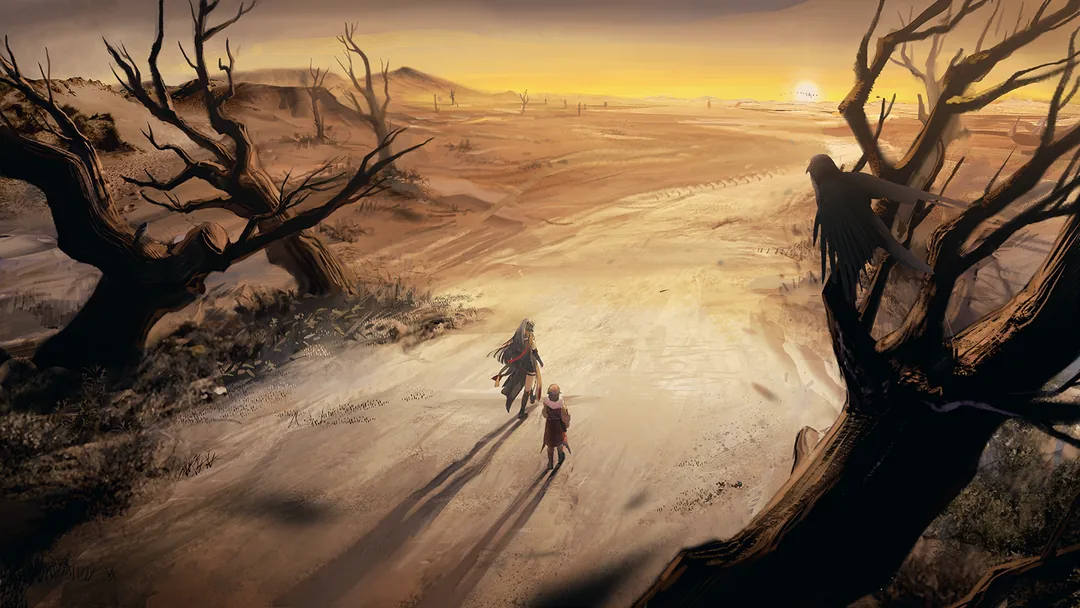
To Bang Dolsoe, now awake, Qiubai says: if he has nowhere to go, then come with her for now. A person without a name can sometimes raise an even louder voice. But should he gain power and stray onto the path of evil, then she will kill him with her own hands.
Who, then, was that boy who died without a name?
One question remains. Who was that nameless dead boy, the one who nearly had Bang Dolsoe's name forced upon him?
The footage recovered from the repaired camera gives the answer. The boy was a director shooting a documentary—an Infected with Oripathy and little time left, who had come all the way to these distant mountains hoping to record 'the real land and its people' one last time.
He had followed this mountain path's Messenger with his camera in hand. The Messenger's name is Wind Chimes. She, too, is Infected—bearing a broken horn, she shoulders others' letters and parcels and walks dozens of li of mountain road even on rainy nights.
The two had quarreled. When the director said he 'wanted to change this place,' the Messenger sent him away, calling it nothing but pity steeped in a sense of superiority. Not long after, the director was swept away by a debris flow, alone.
The people who stayed here are doing their very best to live, each in their own way.
— the Messenger
Wind Chimes never does manage to learn his identity—not his name, nor where he came from. But she resolves to carry on the journey left in his camera, to finish in his stead the documentary he never could.
Two months later, in a village with more wells than before
Two months on, Moxian Village had changed. Wells had multiplied, new irrigation had come in, and people gathered along the paddy ridges. With the chief gone, there was much to do in the village, yet everyone was pulling their own weight.
Two children, Xiaoping and Xiao'an, chatter about building a tractor out of abandoned Chidao construction tools and riding it all the way to Lungmen. Wind Chimes takes a photo of them—because a photo is something you can carry, so that even if they're far from here someday, they'll still be able to remember home.
In the director's camera there also remained the face of a boy he had happened to film along his journey—that boy, gleefully running away, hollering that a terrifying swordswoman was chasing him from behind.
I am Bang Dolsoe! A man who aims to be the greatest knight-errant of all! Remember my name.
— Bang Dolsoe
The boy who left home to make a name for himself nearly had that very name stripped from him in his own hometown. Yet beyond the lens, his face still cries out his name, clear as ever. A forgotten village, a person who has gone—both will one day quietly fade away, but someone, in just this way, leaves behind a trace that they were once here.