
Laterano is the sacred city of the Sankta. This city where doctrine is everything is, for the first time in history, gathering envoys from every nation of Terra for an 'All-Nations Summit.'
And yet in this city, while doctrine is enforced to the letter, blowing up a building is perfectly legal as long as you file a permit. On one such shameless spring day, in some alley of the city, eight-year-old Cecilia was keeping watch beside her sick mother.
Just before dying, her mother made her swear to exactly one thing: 'Never go near anyone in uniform.' But the one who ends up taking Cecilia in is, of all people, someone in that very 'uniform.'
Just another day in Laterano: explosions are legal, but the body was already dead
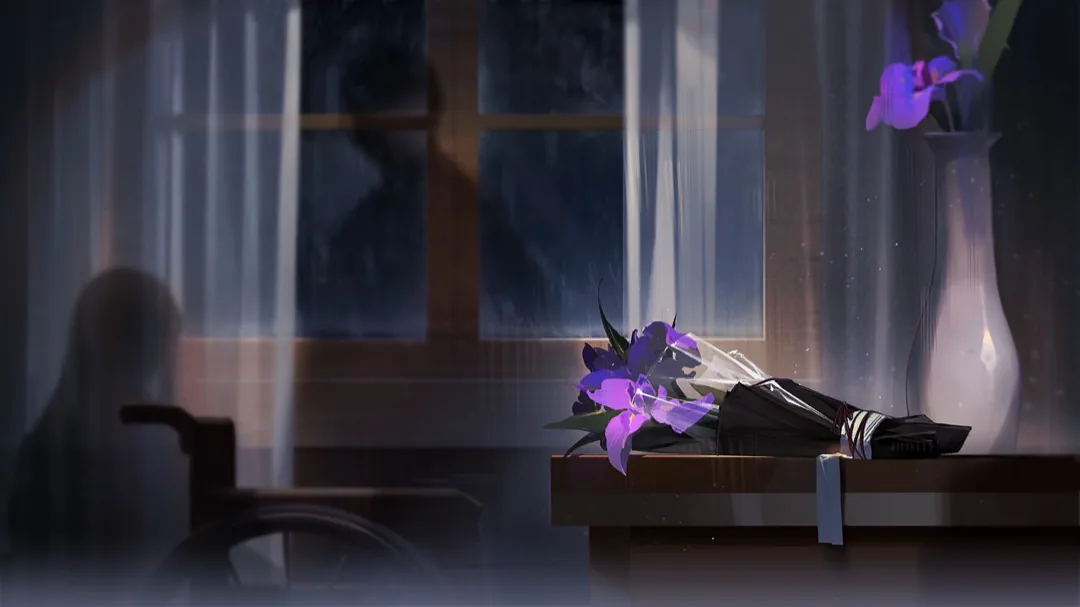
Every night, a man visits a hospital room in this city. The woman in the wheelchair always pretends not to notice, staring out the window instead. Between the two of them, it feels like both what can be said and what can't have already been decided long ago.
Meanwhile, out in the streets, the citizens of Laterano were merrily blowing up a monumental pillar. They'd filed the permit, evacuated the area, and even brought in a notary Executor as witness — perfectly 'legal,' apparently.
The Liberi Fiammetta and fallen angel Mostima were the ones who saved a Columbian merchant caught up in the chaos. The real trouble happens next, at the cathedral.
When a Leithanien duchess throws a fit, All-Nations Messenger Oren calmly talks back, and Cardinal Beliv steps in to smooth things over. Oren is smug and calculating, but somehow you just can't hate the guy.
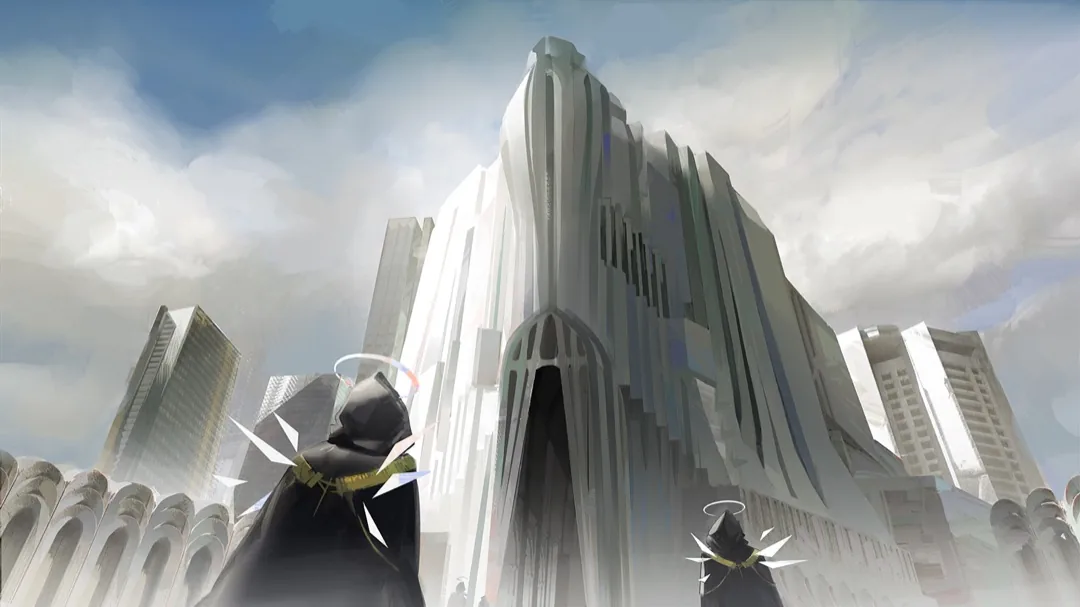
Beliv doesn't particularly like Oren. Even so, when he drags him off to a side room threatening punishment, the two of them end up bickering away like usual. The Pope just watches the whole scene and smiles.
That same morning, in the Stebonus District, a principled Executor named Federico quietly discovers a body. An unmarried woman with no will, no registered testament — her name was Feoria.
While the funeral proceedings were underway, next door, an eight-year-old child that nobody knew about was left alone — never going outside, never getting caught, exactly as her mother had told her.
A trainee Executor picks up a lost girl — and it becomes her biggest mistake yet
Cecilia can't take it anymore and finally steps out into the street, only to collapse. The one who carries the child to the hospital is trainee Executor Ezel — whose life goal is clocking out on time, yet whose nose is the biggest in all of Laterano.
Ezel gets chills looking at the test results. This eight-year-old is clearly Sankta, and yet she shows no pain, no distress whatsoever. Sankta are supposed to be able to share emotions with one another.
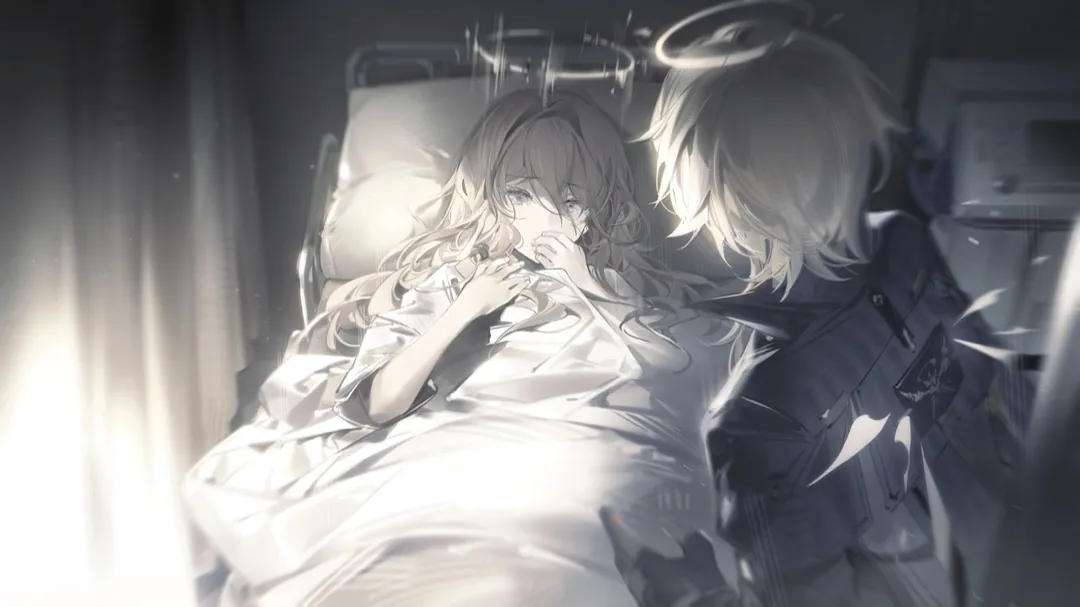
Meanwhile, a suspicious nurse shows up in the hospital room. She turns out to be the Liberi Patia — calling Cecilia a 'comrade' and trying to take her away. Coming from Iberia, Patia hates nothing more than Laterano's Liberi, who serve the Sankta like gods without even realizing it.
Ezel buys time through a window she'd left open earlier, then carries Cecilia on her back and runs. Because she'd made a promise — to find her mother.
But that dead woman's name sounds oddly familiar
Wandering the old neighborhood with Cecilia in tow, Ezel freezes when she hears the name of the girl's mother. Feoria — the very woman whose body she'd confirmed that same morning.
Meanwhile, the papal see has already opened a case and dispatched someone. Liberi guard Fiammetta steps in personally.
Running into Patia at the hospital, she appeals to their old friendship and warns her: 'If you stop now, it's not too late.'
Patia scoffs. 'Has Sankta doctrine ever once actually applied to Liberi?' Fiammetta doesn't answer. Instead, she draws her gun.
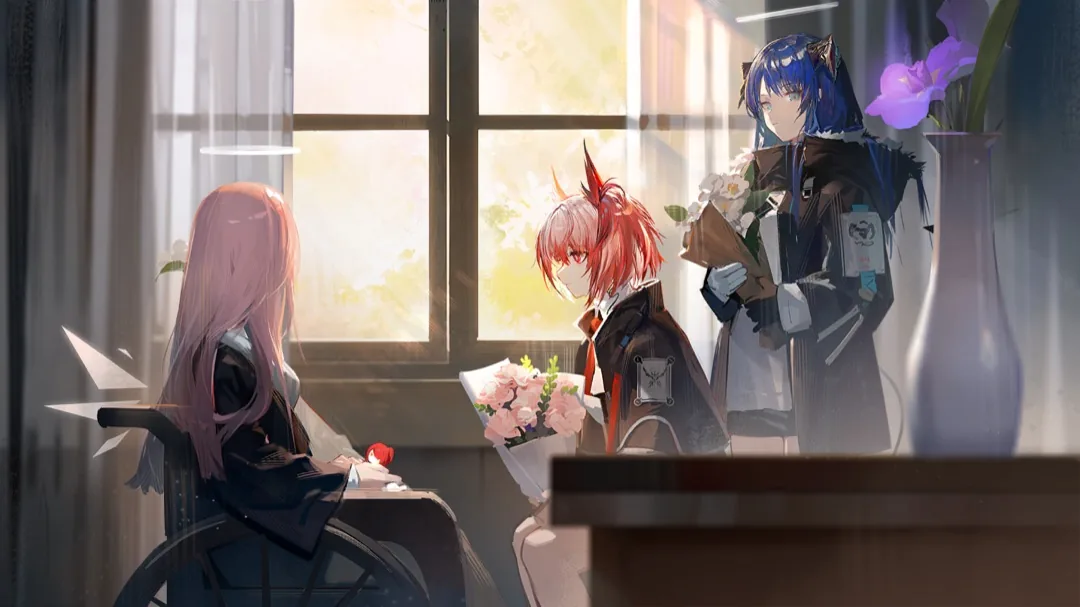
Lemuen, once a champion marksman, is now going through wheelchair rehab. He says it happened in an accident five years ago, but both he and Mostima grow strangely tight-lipped whenever the subject comes up.
A Sankta who shouldn't be a Sankta, and a man whose mind never stops calculating
In the end, Ezel runs into All-Nations Messenger Oren. He answers her plainly — Cecilia is a Sankta-Sarkaz mixed-blood, 'a Sankta who never should have existed.' Normally, such mixed-blood children inherit one parent's race outright, but she's an exception.
Oren has his own agenda. Cecilia's very existence is a bargaining chip. 'You could put Laterano itself in danger.' He claims violence isn't his style, but his eyes are already running the numbers.
On the run, they realize the singing cotton-candy vendor's horns weren't a wig after all. A Sarkaz had been hiding right in the middle of Laterano. Once exposed, instead of fleeing, she throws herself in the way to protect her comrade.
That night, Ezel agonizes over and over whether to walk away from all this. Wouldn't a normal job with reasonable hours be so much better? But she's already made a promise to Cecilia.
Of all people to show up at the Chapel of the Departed, it had to be a wanted fugitive
Cecilia asks to stay a few days at the Chapel of the Departed, wanting to properly say goodbye to her mother. But there, even the monks address a suspicious figure with careful reverence — as 'the Guide.'
'You can just call me by my name — Andoain.' He introduces himself as someone who opens the door for those Laterano has turned its back on: the abandoned, the broken, the Sarkaz.
Then yesterday's cotton-candy vendor, Rosella, appears again. She tells Cecilia stories of Kazdel, the Sarkaz homeland, and hints, however vaguely, at why her father can't come to Laterano. 'Loving someone isn't a crime.'
Ezel finds the whole situation deeply uncomfortable. She thinks it goes against everything proper, yet she can't actually refute what Andoain is saying.
Next to Rosella, Cecilia smiles at ease for the very first time. Looking at those black horns that resemble her father's, she imagines she might one day get to visit the Sarkaz homeland herself.
Eight years ago, the people who didn't smile
To Mostima and Fiammetta, who visit every night, Lemuen lets slip a name nobody asked about. 'Andoain — so you met him.' Fiammetta's expression hardens.
Eight years ago, the three of them and Andoain were in the same squad. During what should have been a routine mop-up operation, Fiammetta stepped away briefly to answer a support call — and by the time she came back, everything was already too late. Andoain had vanished, and Lemuen spent five years in a coma.
Every time his name comes up, the two of you talk about it like it's some weekend picnic.
— Fiammetta
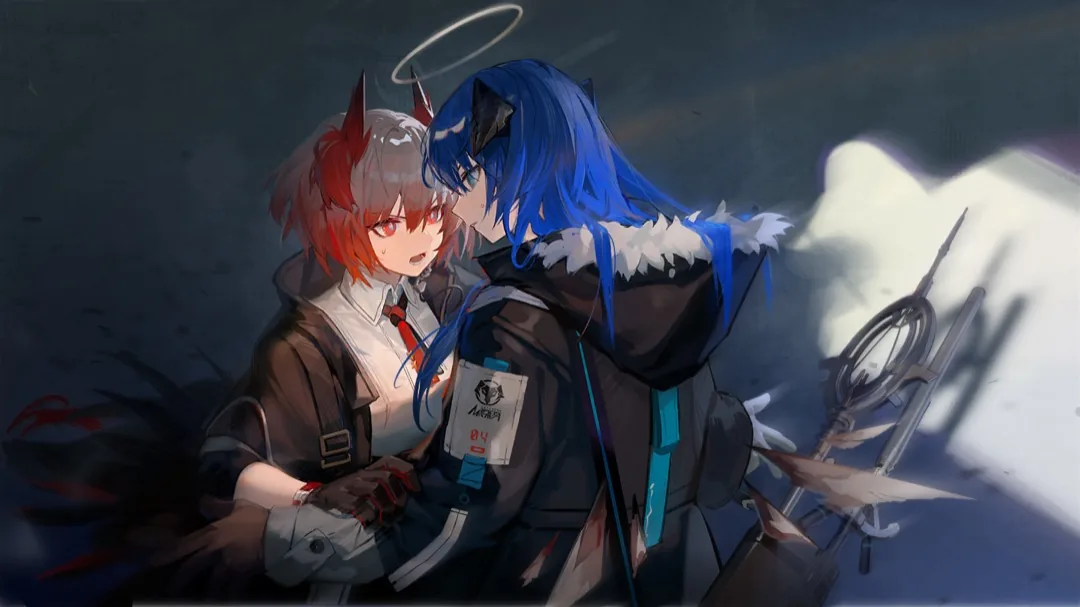
On the day of the funeral, Fiammetta and Mostima finally corner Andoain. But he vanishes without a trace, leaving behind only the words, 'It's not time yet.'
Oren throws the punches, Cecilia makes the miracle
Andoain decides to leave Cecilia's side. He tells her she already has 'something she needs to do.'
Instead, Cecilia heads alone to Laterano's ancient clock tower, the 'Tower of Revelation.' To say her final goodbye to her mother.
Oren blocks her path. He can't simply let a bargaining chip walk away that easily. This time it's Ezel who physically stands in the way, and Federico shows up to declare Oren stripped of his All-Nations Messenger title.
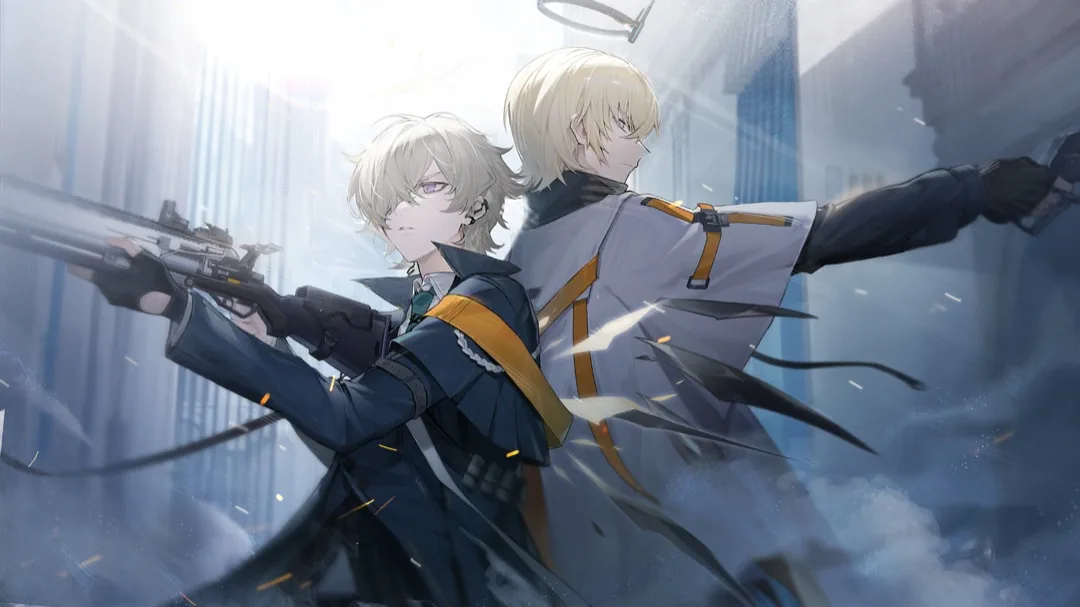
Meanwhile, at the top of the tower, Cecilia begins singing the old Sarkaz song her mother taught her. Clumsy lyrics, a young child's voice.
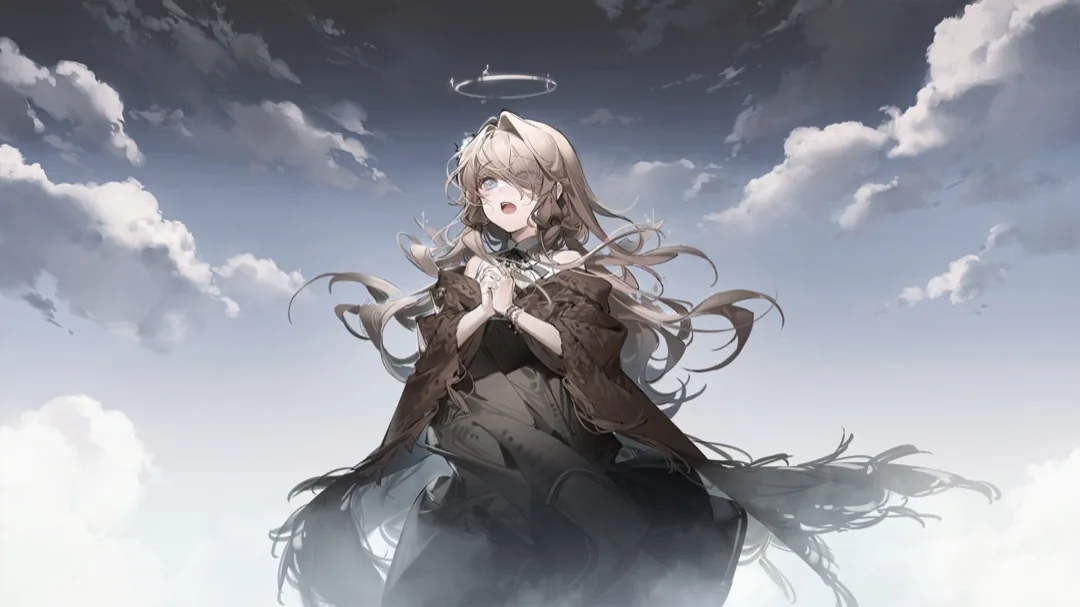
The hero sets out soon, down the long road, to make their dream come true... however far the road may be, without fail, without fail.
— Rosella
This song repeats three times over the course of the story. The one singing it, and the reason why, are different each time — but the meaning is always the same. A wish for someone's safe return.
The Pope and the wanderer pull their triggers side by side, before God
The instant the bell rings, Andoain goes straight to see the Pope. Alone together inside the cathedral, a long-buried question finally comes out: can Laterano really save anyone?
Andoain brings up his hometown, Rocamarea. He'd once asked Laterano for help and received only the answer, 'You are one of ours, but they are not' — and by the time he went back, the whole village had vanished.
Paradise is called paradise only because the wilderness beyond it is so unbearably cold.
— Evangelista XI
Once words fail, the two of them pull the trigger at the same time. And yet both survive. The very law that says breaking doctrine leads to corruption is put to the test, right here, right now.
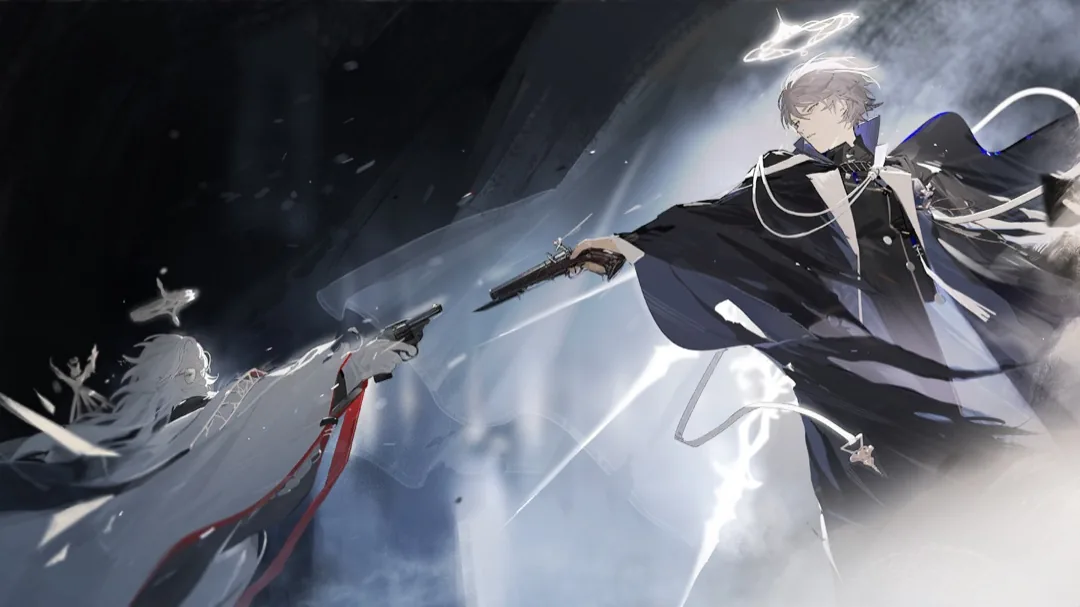
The Pope takes Andoain down beneath the cathedral, deeper even than where the saints' bones rest. There was something down there recorded in no book.
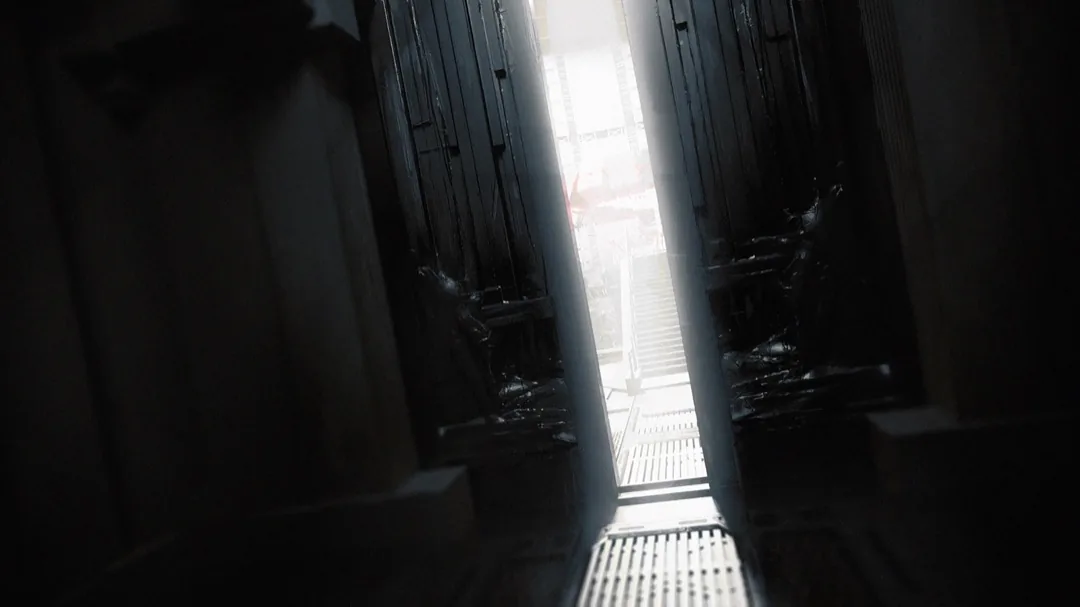
Eight years ago, what really happened in that rain
Fiammetta, Mostima, Lemuen, and Andoain — the four of them were one squad. That day was supposed to be an ordinary mop-up operation. Their targets were a band of Sarkaz raiders, who oddly showed no hostility at all.
While Fiammetta briefly stepped away after receiving a support request, Andoain went in her place to help them. By the time she returned, everything was already too late. Lemuen had been shot down, and Andoain had vanished, transformed into a fallen angel.
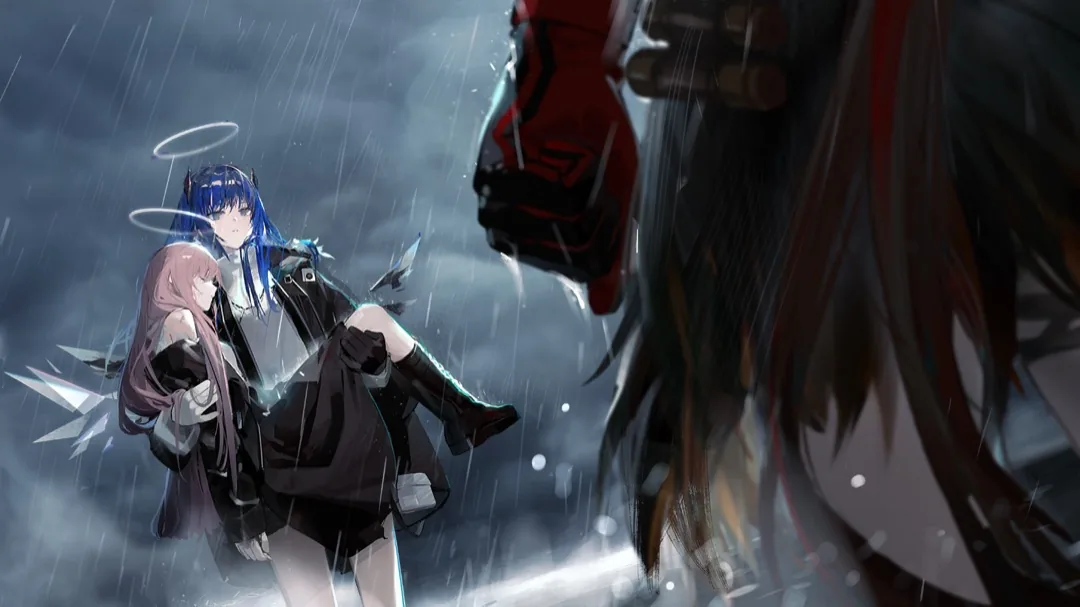
For the eight years since, Fiammetta has spent her life chasing Andoain. Not out of a desire for revenge, but simply to see this whole thing through to its end with her own eyes.
Both Mostima and Lemuen have been strangely composed ever since that day, as if they'd already understood and accepted everything. To Fiammetta, that only makes it feel more foreign, and more hurtful.
Call it obsession — read it as friendship
When Andoain returns to the surface, Fiammetta and Mostima are waiting. But something's wrong with him. He rambles on, words that are neither conviction nor repentance.
'You really think you did nothing wrong?!' Fiammetta shouts. Andoain answers calmly. 'Even if that same thing happened again, I'd do exactly the same thing.'
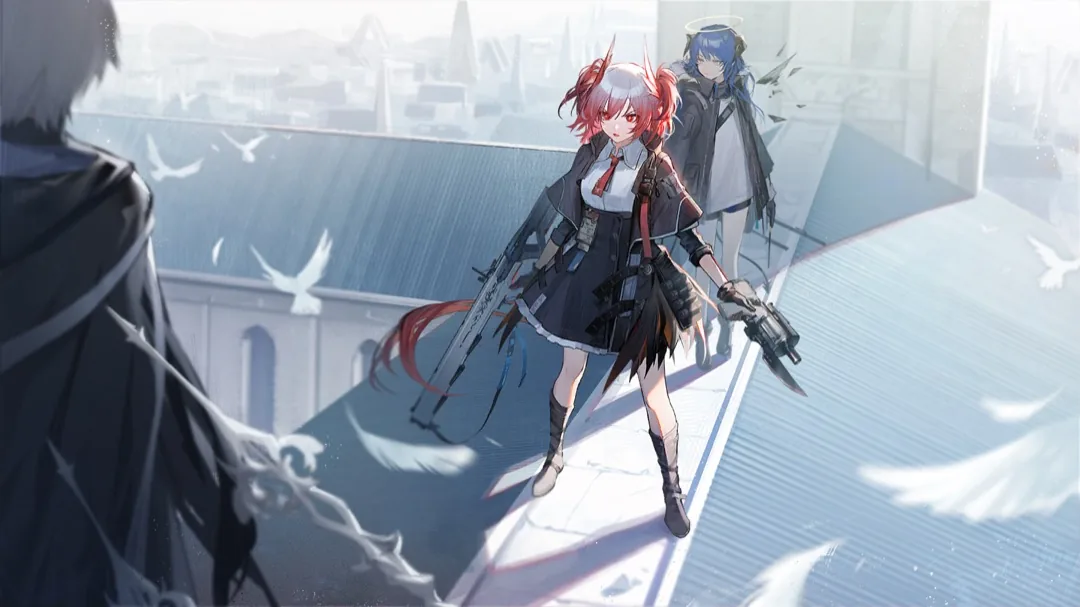
You, me, everyone — aren't we all here because of some obsession?
— Fiammetta
What Fiammetta aims her gun at isn't Andoain, but the weapon in his hand. Rather than kill him, she shoots it out of his grip. That was her own kind of conclusion.

In the middle of it all, Oren steps in. Using a legally permitted explosion(!) as cover, he lets Andoain go — but pays for it when his true identity is exposed in front of Beliv.
Once the chaos settles, the Pope stands before the assembled envoys over a shortwave broadcast. He begins the speech that will later come to be known as the 'Laterano Declaration' — the first-ever proposal for nations to jointly guarantee each other's safety.
Afterward, everyone chose their own path
The summit ends safely, and everyone decides on their next step. Lemuen heads to the papal see's Seventh Bureau; Oren is serving probation under Beliv, now stripped of his title as a former All-Nations Messenger who very nearly betrayed everyone.
Federico, meanwhile, quietly continues his investigation. Digging through two years of Oren's travel records, he finds a name that looks oddly familiar. But that story belongs to another day.
Fiammetta joins Rhodes Island. She picked her new codename herself — 'Breaker of Dawn.' Mostima still can't seem to shake her role of (supposedly) keeping an eye on Fiammetta.
Ezel and Cecilia decide to leave Laterano. Not as a flight, but as a journey to find her father — taking her mother's Guardian Gun with them, thanks to the Pope quietly looking the other way.
I'll say a prayer for you.
— Pope
Andoain, too, sets off again with the Pathfinders. When Patia asks why he's going along, he answers: for a long time, he'd thought they walked the wilderness alone — and maybe that was just his own arrogance.
As she leaves, Cecilia watches the retreating figure of a man wearing a halo in the sunset light, and the word 'martyr' suddenly comes to mind — even without knowing exactly what it means. Then she takes Ezel's hand and takes her own first step onto that unfamiliar road — already far past her mother's words, 'never go near anyone in uniform.'