
Five years ago, the Abyssal Hunters who went after the 'Firstborn' Ishamla were believed wiped out. But three of them — Gladiia, Skadi, and Specter — come back alive. And they carry traces of the Sea Terrors inside their bodies.
Right on cue, Ægir — long silent — reaches out to Iberia first. Kal'tsit and the Doctor, Iberian clerk Jordi, and tribunal envoy Irene, a delegation from the land, head to the deep-sea city of Miliarium together with the Hunters. Their goal: the 'Sea Route Project' — opening a path linking sea and land.
But that path is shaky from the start. There's a missing researcher, a Hunter who's vanished, and one question nobody dares say out loud. In the end, this story closes on the different answers each of them gives to that question.
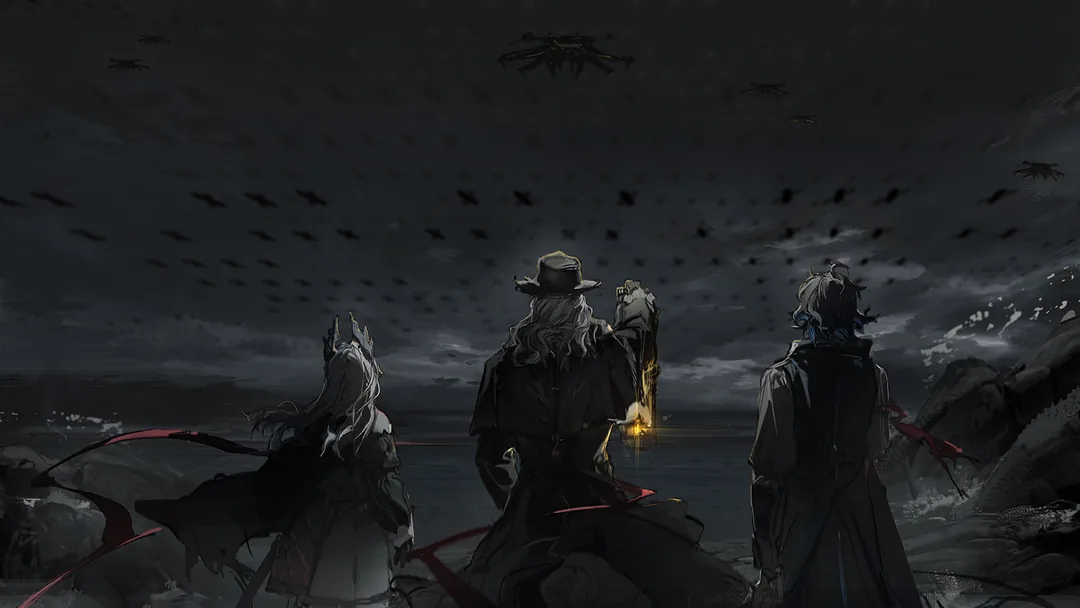
1. The Ones Who Were Dead Come Back, and Everyone Reaches for an Interrogation First
Miliarium is a completely alien place to Jordi. People eat without knives, do laundry without undressing, and just float through the air. The scholar Abitus kindly explains it all, but the more Jordi listens, the more confused he gets.
When a patrol robot called a 'Helper' tells him to clear the area, Jordi reflexively apologizes in the most formal terms he knows. Abitus laughs it off — no need for that, he says, it's just a guide machine.
Jordi even tries to trace his own roots here. The legendary shipwright Breogán once passed through this city. But looking at his face in the old footage, Jordi can't find a single trace of resemblance.
What's really loud, though, is what's happening with the Hunters. A council convenes in the city's massive circular arena. Over the traces of Sea Terror left in the bodies of the three who returned after five years, the whole city stands before them, firing off questions.
Fortunately, their old comrade Blandus steps up to vouch for them. He explains that every Abyssal Hunter's body carries a 'Self-Adaptive Interface' that suppresses the Sea Terror genes, and that the changes they're seeing now all fall within expected limits.
They will not turn into Sea Terrors.
— Blandus
Not everyone buys it, of course. A researcher from the Academy raises a doubt — the information Ulpianus brought back about 'multiple Firstborns' fits together a little too neatly.
An explanation that fits this perfectly is either the one true answer, or one crafted to answer every possible doubt.
— Technology Institute Researcher
Then, from the shadows of the stands, someone threatens to strangle the Doctor. It's Ulpianus, the Abyssal Hunter who's been missing for five years — the most suspicious figure in this whole story. He vanishes after leaving only one warning: watch Skadi closely.
After the hearing, Skadi and Specter take the Doctor sightseeing around the city. Specter used to want to be a sculptor, they say, and Skadi used to be the technician who single-handedly managed the whole city's lighting. Small, warm bits of the past they never got to share five years ago.
2. A Quiet Disappearance, a Loud Premonition
The city's data analyst, Tullia, disappears. Marine Patrol Commander Secunda takes charge of the investigation, and Irene volunteers to help. As it turns out, Secunda once wanted to become an Abyssal Hunter herself — her application was simply turned down.
Secunda and Blandus bicker like an old teacher and student — over artificial tears, over tactless jokes. But beneath that warm banter lies a quiet resentment neither of them has ever asked the other about.
In fact, Secunda once applied to undergo the Abyssal Hunter modification herself. Her mentor had been the program's first Hunter, and she could only watch as he came back battered again and again. But her application was rejected, and she was never even given a reason.
Meanwhile, Ulpianus, still in the shadows, quietly lets the Doctor in on something: the one they killed in that battle five years ago wasn't the only 'Firstborn.'
There are 'multiple Firstborns' out in the sea.
— Ulpianus
Meanwhile, a Sea Terror attack wipes out two whole fleets, leaving only 26 survivors. The Sea Route Project was already in trouble. Gladiia bitterly admits that the war plan drawn up five years ago never left room to admit it could be wrong.
3. The One Who Loved the Jade Vine
Tullia, as it turns out, was an unremarkable person. Cultivating an endangered seaweed was her hobby, and when the city abandoned its volcanic base, she was the one who secretly moved her little plants out to keep raising them.
Her colleagues Lucilla and Cassia worry about her without really knowing her well. But one offhand remark from Cassia quietly redirects Secunda's suspicion toward Tullia — without anyone noticing.
It turns out the Deep Sea Church used her as bait. They framed her and drove her out of the city, and Tullia fell through a drain in the circulation system, where the Sea Terrors took hold of her.
Days later, Irene and Secunda find Tullia, now half turned into a Sea Terror. She's still clutching her nutrient solution, dragging herself painfully toward the crate of seaweed she used to tend.
The moment she sees her own reflection in the aquarium glass, Tullia stops struggling. Secunda sees her off with the very lullaby their Commander used to sing to put the squad to sleep.
Her journey has ended ♪ Her home is right before her eyes ♪
— Secunda
4. The Scariest People Are the Good Ones
While the Hunters are undergoing follow-up surgery, the Deep Sea Church raids the operating room. They're driven off without much trouble — but the real traitor turns out to be Blandus, standing right there.
For five years, he had been secretly researching a phenomenon first observed by accident in Ulpianus's body — a balance point where Sea Terror genes and human biology stop rejecting each other. He quietly embedded that theory into the Sea Route Project's Tier-4 weapon.
Instead of a weapon to kill Sea Terrors, he wanted to build a future where humans and Sea Terrors coexist. Blandus believed that was the true way to save the Hunters.
The Abyssal Hunter program failed, but the Hunters still have a chance to fulfill their purpose — with a solution.
— Blandus
Ulpianus comes to confront him. Neither the excuse of good intentions nor their long friendship makes any difference.
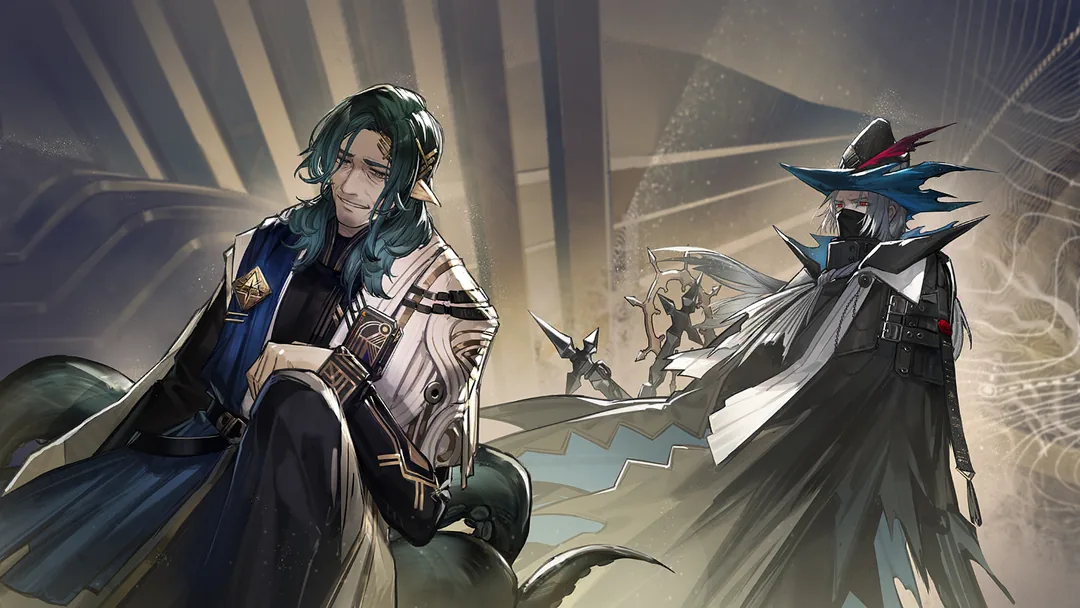
You have no right to die with regret or lingering attachment.
— Ulpianus
To the very end, Blandus insists he wasn't wrong — that all he did was build a real bridge between two races, humans and Sea Terrors. Ulpianus listens to all of it without so much as a change in expression.
The moment the weapon Blandus tampered with activates, all of Miliarium begins to pay the price.
5. A Nest Blooms in the Heart of the City
An entire beacon tower turns into a Sea Terror nest. Deathblooms sprout up all across the city, and Deep Sea Church believer Cassia reveals herself and tries to destroy the city's core units.
The one who stands in her way, unexpectedly, is her longtime junior Lucilla. The junior who was always just cracking jokes grabs hold of the safety valve, risking her own life.
Because — because there's no road left behind me.
— Lucilla
Cassia refuses to bend her convictions to the very end. She says that when a person clings too tightly to a value, the moment that value collapses, they collapse right along with it.
When a human life becomes bound to some value, sooner or later it's fated to collapse meaninglessly.
— Cassia
Jordi stays behind with Ulpianus in the beacon tower's central control room. Fixing the facility management frame to detach the whole tower and sink it is the only way out.
While he repairs the device, Abitus holds off the Sea Terrors with nothing but a single lantern. And Jordi finally asks the question he'd never dared to before — was it really Ægir's future that drove you to despair, or was it yourself?
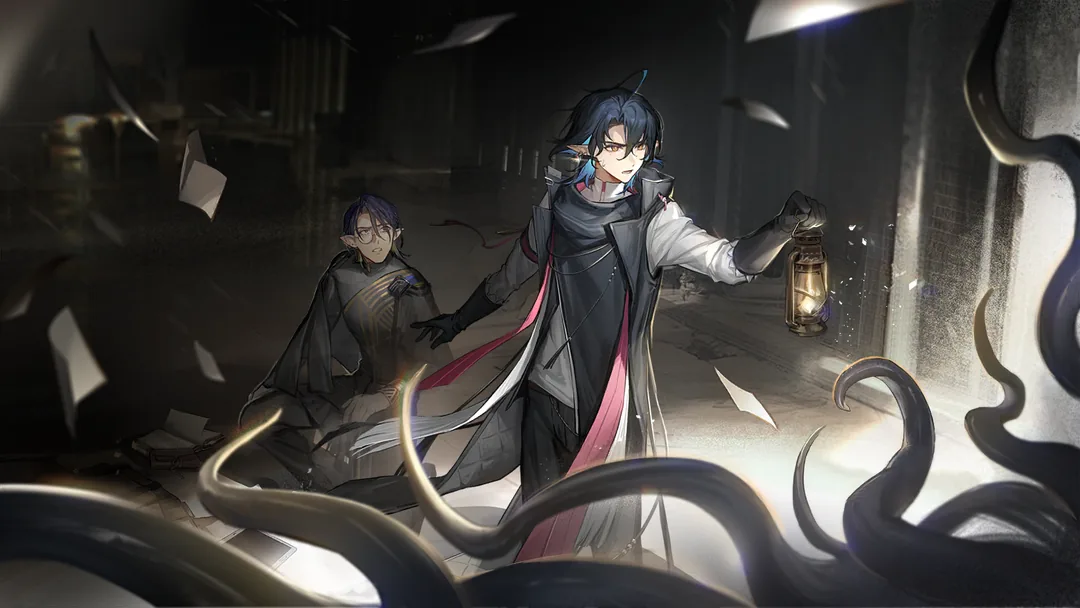
The tower finally sinks, and Ulpianus chooses to stay behind inside it. He wanted to find out — with no one else watching — just how close he'd already come to the Sea Terrors.
6. The Scholar Who Walked Out of a Story
A single Sea Terror appears in the middle of the arena, speaking with the voice of 'Martus,' a legendary scholar who vanished 200 years ago. He was the very origin of the Deep Sea Church.
Martus recognizes Kal'tsit. By an incredibly old name, no less.
The Doctor, too, looks like he half-recognizes him. Martus says the Doctor once visited this place, deep in the sea, long ago.
But the Doctor has no memory of it left. Kal'tsit cuts in to answer for him — for some reason, she says, the Doctor doesn't remember most of that time.
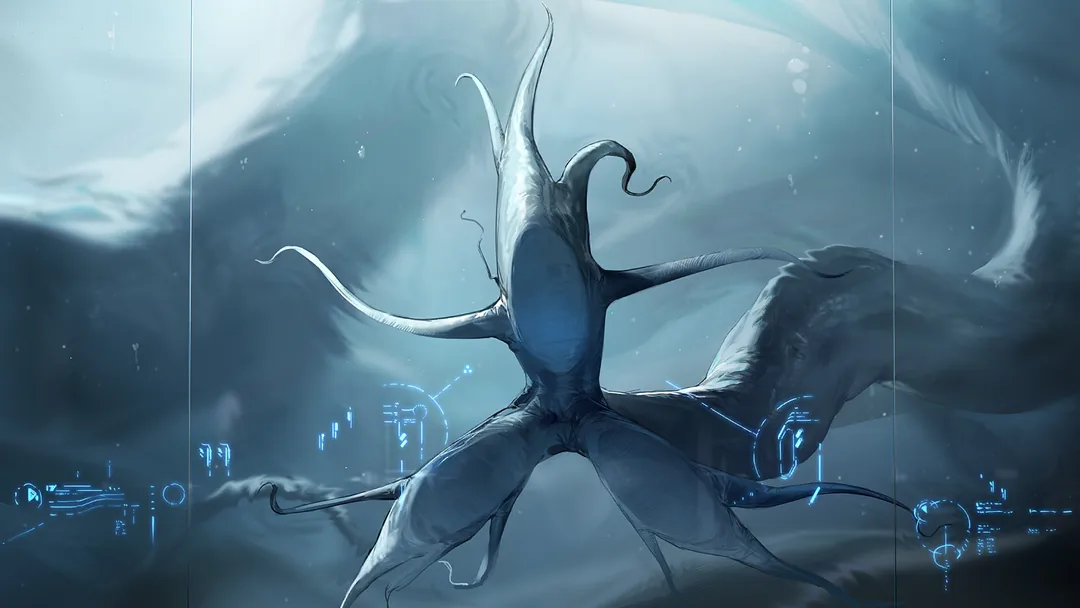
Kal'tsit...... AMa-10, as recorded in the archives. You surprise me.
— Sea Terror (Martus)
He says he glimpsed the fall of an ancient civilization, and a premonition of an even greater ruin to come. That's why he staked his life on raising the Sea Terrors, on his species' 'survival.'
How can one speak of civilization at all, without survival?
— Sea Terror (Martus)
Clementia cuts the conversation short at swordpoint. But Martus's final words have already lodged themselves in everyone's heart.
7. The Route Meant to Drive Out the Sea Terrors Opens With Them Instead
Miliarium sheds its own diseased sections and rises to the surface. On the far side of the city, a true storm of madness — a living swarm of Sea Terrors — surges in right alongside it.
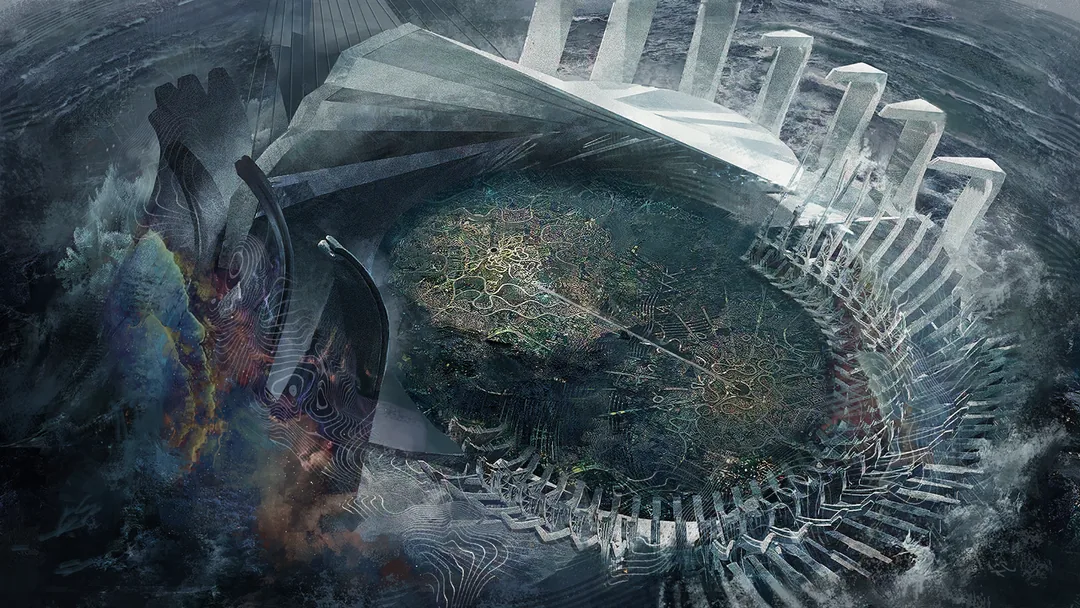
Iberia's long-lost lighthouses flicker back to life one by one — places that had lain silent as the dead for over half a century. Watching that light, Saint Carmen quietly repeats to herself: survival or ruin, there is no other road.
But then something no one expected happens. The floating machines of the beacon tower, dead for 200 years, are reborn in the hands of the Sea Terrors. The Sea Terrors cradle these newborn machines like their own children and swim alongside them.
As those lights link up one by one, a route spanning the entire ocean is finally completed — not the path humanity meant to build, but one built together with the Sea Terrors.
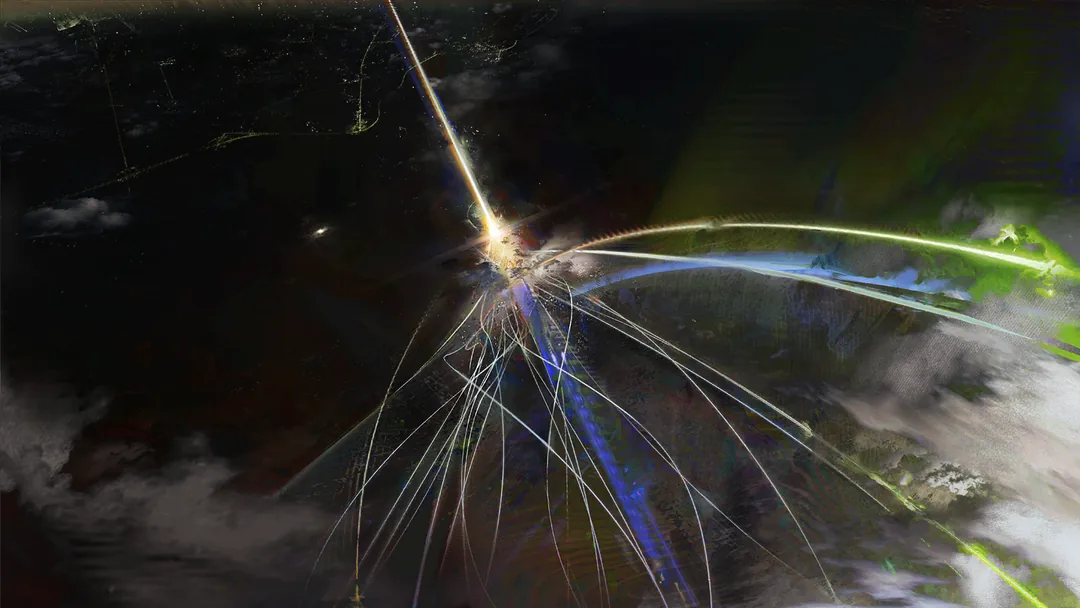
In truth, the hope Clementia pinned on this route was modest from the start. To show, with their own eyes, that Ægir's main forces could still go to war alive — to a hundred thousand soldiers and civilians, and to Granfaro's punitive army. That alone would have been enough.
Meanwhile, through its drone fleets, Ægir sends its first-ever official declaration to every civilization on land: that humanity must form a single community — under Ægir's leadership, no less.
Under Ægir's leadership, we will surely overcome this crisis together.
— Ægir's Broadcast
Gladiia says there's one more task left now — to capture their old comrade Ulpianus, and hold him accountable, for the last time, as an Abyssal Hunter.
Epilogue: Each Their Own Next Step
Horatia, Gladiia's mother and consul of the Scientific Development Planning Bureau, appears via hologram. Now that the route is open, Ægir declares it will 'help' Ursus, Kazdel, and Bolívar alike.
Kal'tsit immediately spots the arrogance hiding behind that goodwill. No one, she says, can guarantee that this help will stay just help.
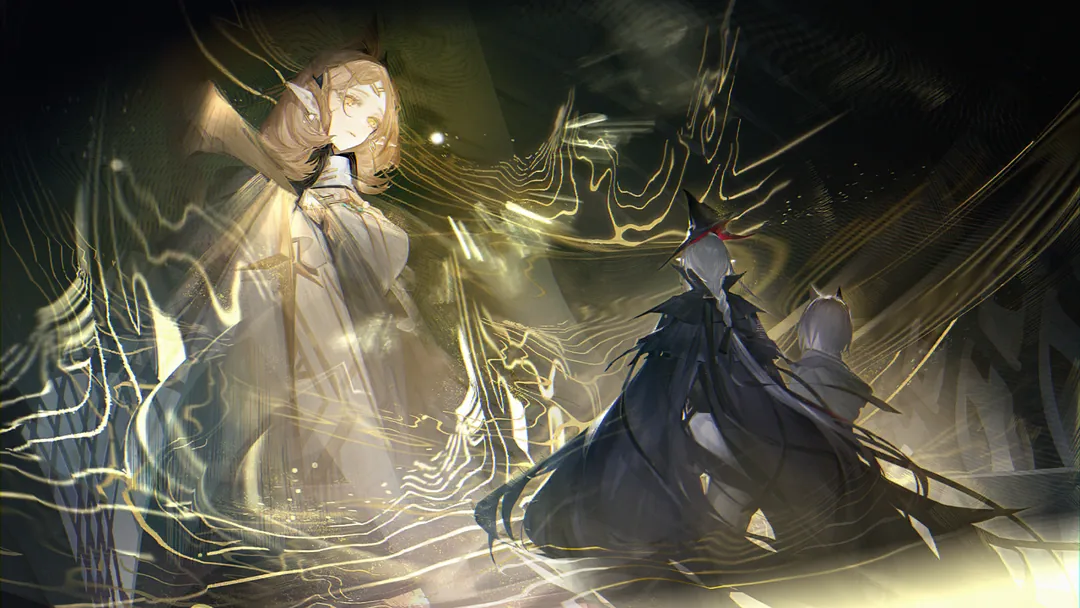
Clementia, for her part, keeps Skadi and the Doctor's secret hidden even from Horatia. She and Kal'tsit have already agreed — the moment their identities come to light has to be a moment the two of them choose for themselves.
In a corner of an alley, Skadi runs into Martus alone. He tells her that she might be Ishamla's last hope.
Instead of answering, Skadi swings her sword to cut the conversation short. But even after she sheathes it, her hand is trembling, just slightly.
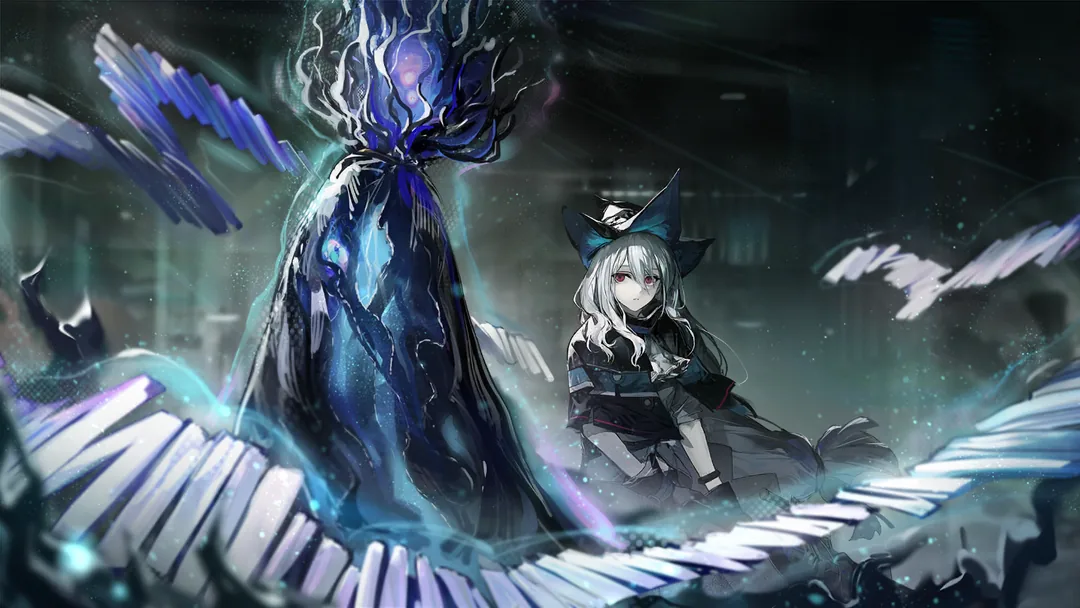
Now that the route is open, Abitus says he'll set off for even more distant, unknown seas, and asks Jordi to come with him. You don't need to prove your bloodline, he tells him — the first time he's ever said anything so sincerely.
We don't need to prove where we belong.
— Abitus
Jordi still hasn't decided whether to sail off into the unknown with Abitus, or stay in Iberia and shoulder a heavier responsibility. Saint Carmen simply tells him, calmly, that either way, it's his choice to make.
And Ulpianus walks deeper into the Sea Terrors' den, chasing his answer — toward the voice calling out to him.

This is how the story began — a Hunter stepping onto the shore, and the question of why he hesitated, why he seemed so uneasy. Now, we think we understand.
Coming back, and having truly come back — those might be, in the end, two completely different stories.