
Integrated Strategies is a game where you explore a randomly-assembled old castle again and again. So rather than a fixed plot, the backbone of the story here is the setting laid over that stage and the one truth that keeps repeating. And the name of this stage is none other than 'the Theater.'
A Rhodes Island scout squad loses its way in thick fog. Not knowing whether they're moving forward or just going in circles, they set foot inside an old castle.
The castle welcomes its guests. But once night falls, this place turns into a theater of ghosts.
As both audience and actor, the squad is drawn onto this stage. The bell announcing the curtain's rise has already rung.
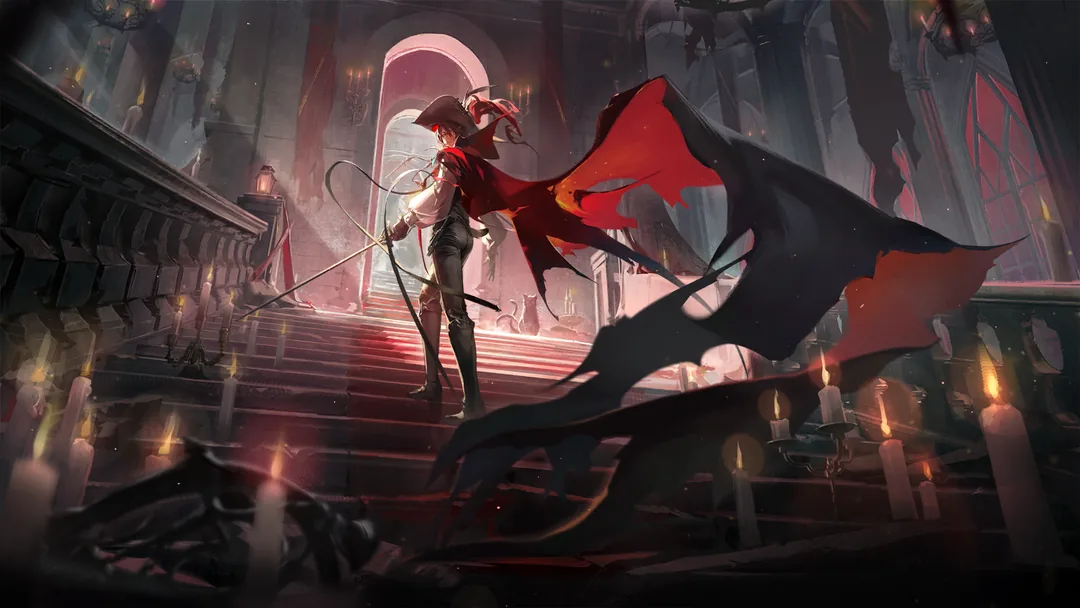
1. The Old Castle Locked in Fog
The Sunset Garden greets its guests like this: Come in, you who have lost your way — the old castle welcomes you. But that sunset glow is not the color of hope.
The old castle unfolds floor by floor, following time from dusk to dead of night. From the Foggy Crossroads to the Sunset Garden, past the Ruins of Home, to where the Nightmare begins.
And then down to the Corridor of the Red Moon, where the clock hands stop at midnight, and finally to the Lobby of Desire, where even time itself is erased. On that final floor, nothing rules over the order of time but a pure hunger for beauty, art, and perfection.
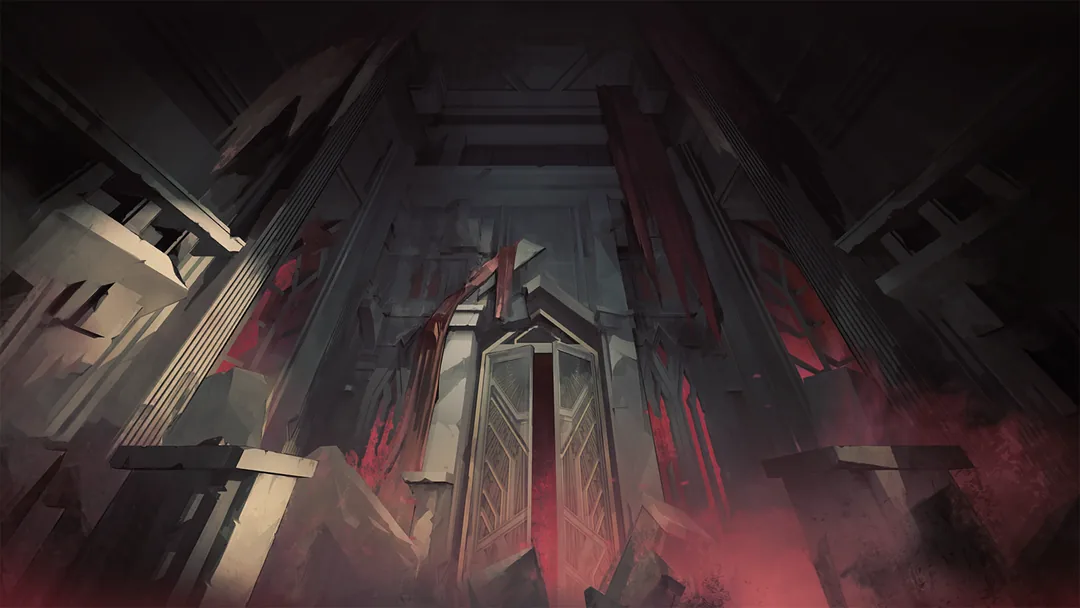
In every hallway, sweet yet strange incense candles burn. Their thick scent leaves you dizzy, your vision swimming.
It's not hard to see why everyone who's breathed that scent too long has lost their mind. In one room, elegantly dressed artists tear into each other like beasts.
2. The Crimson Troupe
The true master of this stage is the Crimson Troupe — a killer organization disguised as a collective of artists.
A detective calling himself 'Tin Man,' who claims to be from the Maylander Historical Society, tips the squad off. A trench coat, a fedora, and beneath it, an oddball with a face made of metal and machine parts.
Years ago, a member codenamed Solitaire cut down the organization's leadership, and the Troupe supposedly scattered after that. But everything happening in this old castle proves the Troupe is far from dead.
Still handing out death and suffering to innocent people. Madame Sicilia's token puts it this way: whether truth or lie, kneel before the desire that stirs within you.
All around the castle are people trapped while chasing the Troupe — like Tin Man, who came to investigate the Crimson Troupe's traces and got trapped right along with everyone else. He shares what he knows, then vanishes down the end of the hallway.
3. A Night at the Old Castle
The old castle at night bustles with all sorts of characters. There's a miniature theater where, if you drop in a coin, a lone knight replays his proposal, his duel, and his death, over and over.
The play in that miniature theater is a lonely one. The coin tossed to a beggar rolls off the stage, the proposal offered to a lady is refused, and the treasure presented to a king is thrown back. The knight is always left alone.
On the other hand, there's also some silly comic relief. A duck who calls himself 'Duck Lord' struts across the stage, telling the guests gathered for the banquet to go home while they still have the chance.
There's also an old woman who hands out treasure in exchange for stories. She laughs and says she's a Feline who heard the tale from her granddaughter, though something about her feels like she's hiding more than she lets on.
The castle is also full of other lost guests — a Duren rolling a wine barrel, getting drunker by the moment, Liberi fighting over the throne of a fallen empire, even a knight troubled by his failure to draw the holy sword.
There's also an old woman sitting on a pile of crates, reading a storybook. For a few coins, she sells the stories of past treasure owners, and once you hear the tale, the squad becomes the new owner of that treasure.
She laughs and says she's a Feline who heard the tale from her Caprine granddaughter, though something about her feels like she's hiding more than she lets on. As you leave, you notice the book's cover, written in Victorian: 'The New Geoffrey's Timeless Fairy Tales.'
The treasure-hunting Jarak Trio passes by too, along with an old militiaman reciting the fallen glory of Gaul, and a knight still troubled by his failure to draw the holy sword. Each of them wanders this stage, carrying one unfulfilled dream.
The most chilling sight of all is the Crimson Ball. Men and women in smiling masks refuse to stop dancing, even as their shoes wear through and their feet bleed.
Someone whispers to the squad that the Troupe leader will surely love their song. Amid all that merriment, the squad feels nothing but dread.
Reaching out because you're curious about the face behind the mask is the greatest taboo at this ball. The instant you lift a smiling mask, all that merriment instantly bares its teeth.
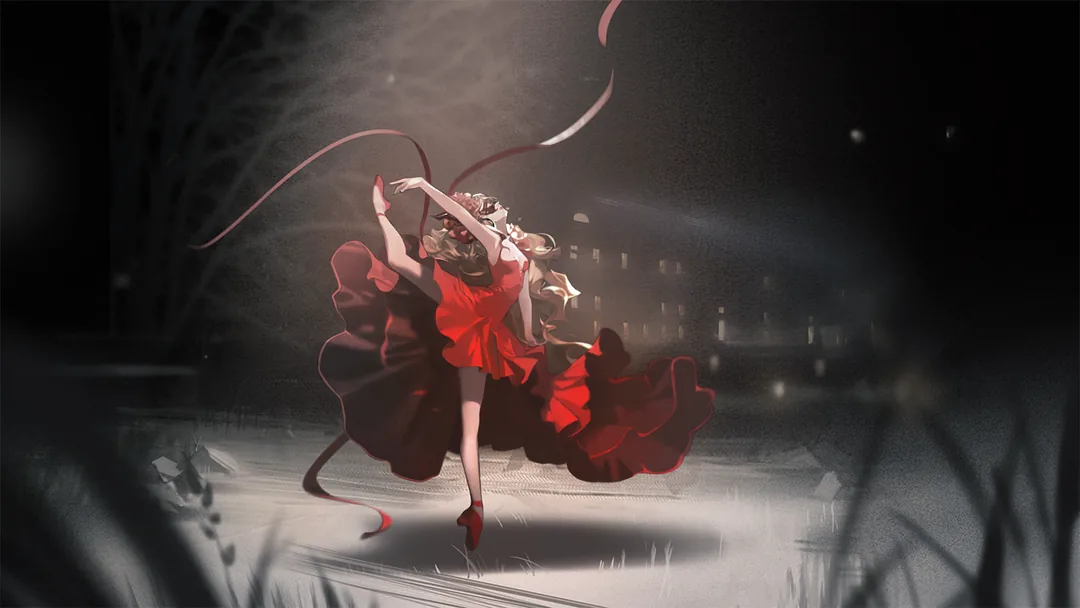
The castle overflows with people trapped like this, ensnared by something beyond them — a young Feline hiding under a desk, trembling at the thought of being forced to act and sing, and a Sarkaz woman spinning alone in red dancing shoes.
In a spacious hall, statues in stage costumes stand packed together, their eyes closed. Recalling the warning not to wake the sleeping statues, the squad quietly shuts the door.
There's also a vampire girl, bound in chains, begging for blood before finally revealing her true nature. Each of them carries a short tragedy of their own, wandering this stage as one of its characters.
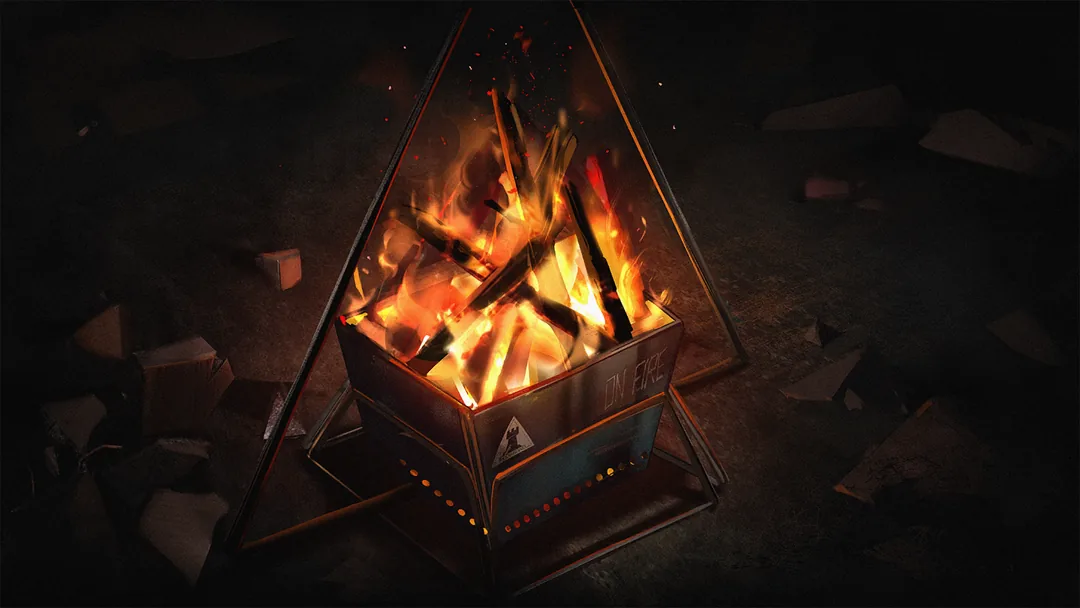
A chatty adventurer by the campfire spins one absurd tale after another — that the President of Columbia is secretly a robot, that Sami's snowy mountains are slowly on the move, that a human-modification experiment lies hidden behind Bolívar's wars.
If life is one long play, is it a comedy, or a tragedy? The old castle keeps asking its guests that same question.
4. Madness in the Name of Art
Deep within the old castle, in an elaborately hidden room, the squad discovers a stone tablet. Carved into its back is this inscription:
In the past I was disheartened by the venom of foolish crowds, yet how could art lose its true meaning simply because it appears coarse and ugly on the surface? If art existed only in appearance, how could one ever tell beauty from ugliness?
Deep within the old castle sits a jewel-studded coffin, and from inside it a voice asks to have the lid opened. Open it, and a handsome youth offers his thanks; walk past pretending not to notice, and you get to keep only the jewels. Whichever you choose, this castle is testing its guest.
To the Troupe, murder is art, and suffering is a script. That twisted belief seeps through the entire castle like incense smoke, turning guest and actor alike into characters upon the stage.
Behind one door, elegantly dressed artists are killing each other, out of their minds from the incense. From further down the corridor, an unknown voice invites the squad to face the actors in a knightly duel.
"I'm rather interested in what you all did back in Kazimierz." With those words, four unfamiliar knights step out of the darkness, saying the squad's participation will make this tedious repertoire so much more dramatic.
5. The Truth Behind the Stage
Behind its glamorous facade, the castle is devouring people. There's a prisoner who flies into a rage if interrupted while carving a story into the wall, a Leithanien Tower caster trying to slaughter every banquet guest for the sake of his own play, and even the oil painting of an actress who perished on stage.
The protagonist in that painting is said to have realized, only at the very end, that she'd been living inside someone else's conspiracy the whole time — and to have thrown herself from beneath the tower to escape every last shackle.
An old wooden puppet with broken limbs sits against the wall. Its features look somehow familiar, and if you open up its chest, inside sits a single red heart.
In a dark room, the squad sees a young man holding a quill pen. Dipping it in oddly colored ink, he's writing something down with great intensity beneath a flickering candle.
As the squad approaches, flames burst from the quill and the young man vanishes into the smoke. All that's left are the mad puppets that rush in to protect him.
6. A Night of Blood
A hunchbacked figure tells the squad about that young man's past. A poor child who dreamed of becoming an actor joined the Troupe, and learned one skill at a time from his masters.
From 'Shadow,' the art of illusion. From 'Sword Dance,' the technique of fighting as though dancing. From 'Windlantern,' the craft of acting. And from 'the Master,' a voice that could steal any heart.
Then one day, the young man learned that every master he'd admired was, without exception, a villain beyond redemption. And that very night, his masters fell one by one, to their own student's blade.
'Shadow,' master of illusion. 'Sword Dance,' the merciless dancer. 'Windlantern,' who was never what he seemed. It was a night of blood indeed, one where the student's blade proved sharper than any of his masters.
That actor's name is Phantom, codename Solitaire. Having turned his back on the Troupe and left the stage, he was, in this old castle, finishing the last act of his own revenge play.
A poor child's pure dream of becoming an actor was stained with a killer's skill and his masters' blood. What he earned was not applause, but a single mask he could never take off.
An actor who cut down the Troupe with the very skills it taught him. To him, this old castle is both his masters' grave and the final script of his own that he has yet to finish.
7. Curtain Call — and Four Acts
On the old castle's stage, characters left behind by the Troupe bar the squad's path — the Playwright, who writes his plays with his own blood as ink, the crimson-glowing Lucian, 'Blood Diamond,' and even the Grieving Lock and the Troupe's Spokesperson.
The Playwright has already sketched out the final scene with his own hand — an ending where he throws himself into a sea of flame, for himself. Even death on stage is, to him, just another line in the script he must complete.
Lucian, 'Blood Diamond,' is an enemy like a crimson-glowing gem, while the Grieving Lock and the Troupe's Spokesperson are characters who carry, respectively, the castle's seal and the Playwright's will. All of them are gears that keep this ghostly theater running. The squad advances toward the stage's heart, breaking these gears one by one.
Depending on which characters are defeated and which truths are reached, the Crimson Troupe brings down one of four different final curtains for its guests.
Crimson Finale — the most orthodox ending. The play ends, the actors step down from the stage, the person you were looking for has been found, and the exploration of the old castle wraps up safely. Leaving the uproar of the crimson stage behind, it's now time to return to ordinary life.
Grotesque Comedy — you've certainly found the person you were looking for. But no one can say for sure whether the exploration of the old castle has truly ended here. Only laughter lingers where the curtain has fallen, leaving behind an unease that all of this might just now be beginning.
Grand Opening — the Host throws the stage curtain wide open for the audience. He stands shoulder to shoulder with the actors, bows, and declares that every play is now about to begin.
Both the opening and the closing curtain belong entirely to the Host. Since even the guests become part of that endless stage in this ending, the suggestion to hand him a bouquet once the performance ends sends a chill down your spine.
Chapter of Silence — the hidden, true ending. Everything the Playwright wrote down was the truth. The blood that was spilled, the tears that were shed, and even life and death itself.
And the play tells you that isn't even the whole truth of the Crimson Troupe. So uncover and seek out that truth to the very end, and break free of this stage.
Whichever curtain the play closes with, the actor who once left the stage never lets go of the final chapter of his own script. With the very blade that cut down his masters, he keeps erasing the Troupe they left behind.
The old castle locked in fog raises its curtain again each time, shuffling its characters and their order anew. The squad that entered as the audience becomes, before they know it, a character on the stage, and the actor who once left the stage keeps writing the final chapter of his own revenge play. With both the opening and the closing still left to the Host, whether life is a comedy or a tragedy gets put off to the next performance, and the one after that.