
Integrated Strategies is a game where you sail again and again across a sea that's freshly assembled each time. So rather than a fixed plot, the backbone of the story here is the setting laid over that voyage and the one question that keeps repeating.
The wind blows past your shoulder, heading toward the far side of the sea. Your destination lies there, but you haven't set out yet.
Pack your things and finish your preparations. A vast sea is waiting for you.
The sea the Doctor and Mizuki are about to set out onto is the coastal water of a nation once called Iberia. And that sea no longer belongs to people.
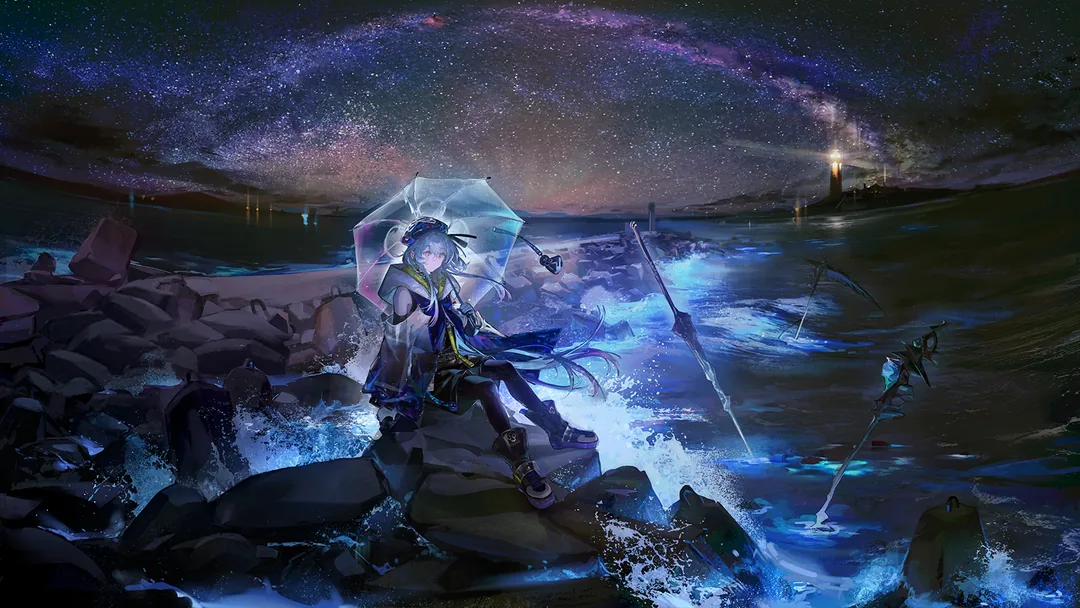
1. The Sea After the Profound Silence
This nation collapsed under a catastrophe called the Profound Silence. The sea swallowed the land, and the brilliant golden age Iberia once took such pride in sank away into dust.
Back when the rinsu-fishing boats used to set sail, village children would make wishes to their parents, and the adults would hand the biggest rinsu to a child. Even that tender custom vanished completely after the Profound Silence.
The sea begins at a sky-blue coastline, passes through a remote coastal island and fierce breakers, and leads on to a secluded hotbed. At its end wait a fluorescent-lit deep-sea forest, and a deep blue cradle that bears all things within it.
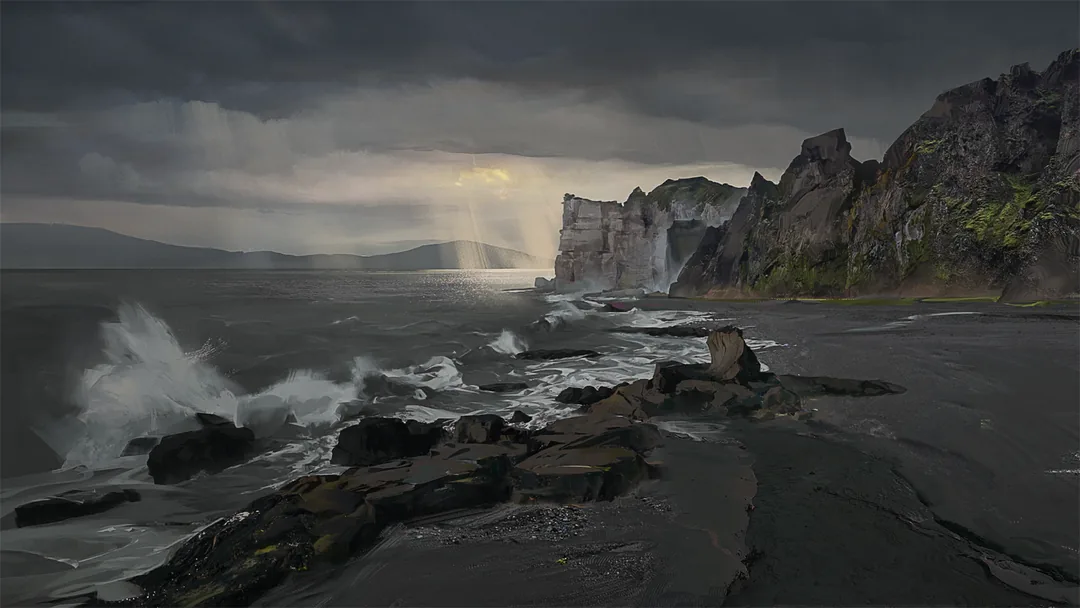
In the cemetery atop the cliff, people burn their dead and let the ashes scatter on the sea wind. Burial at sea used to be the custom here, but now people refuse the sea.
The Corrosion consumed even the light this nation once took pride in. Even the last Eye of Iberia corroded and collapsed, and its once-brilliant history sank away into dust.
You can see why if you look down from the cliff. The Corrosion, a trace left by the Seaborn, covers the sea and is spreading toward the cliffs.
It isn't that people rejected the sea. The sea rejected the people.
Before the Profound Silence came, the sea used to buzz with tales of pirates who seized the king's ships and roamed every corner of it. Their stories, of wealth rivaling an entire nation, vanished along with Iberia's golden age. That there are no pirates in this era now is simply a fact.
In the middle of the empty city stands a museum honoring nameless kings. Yet inside, there are no statues, no names, no titles for those kings at all. Iberia's kings have been lumped together, and have come down to this day as nothing more than 'the nameless kings.'
Still, there's somewhere to rest your weary steps. In a safehouse where the sound of waves can't reach, the light is warm and the food steams invitingly. A bigger wave waits ahead, so rest well here and get ready.

It's Rhodes Island that protects the Infected in this sea. Tulip, the officer in charge of the Iberian outpost, mobilizes every resource she has to keep the Infected alive, and somewhere nearby, a squad is always standing by at the Doctor's side.
2. Fire, Faith, and the Sea's Outsiders
It's the Inquisition that guards fallen Iberia. Its inquisitors and missionaries believe fire alone can burn the Seaborn born of the sea, and they revere lanterns like sacred relics.
But that faith in fire often spills over into madness. Some missionaries drag around a Seaborn nailed to a brazier, and the moment a hymn ends, they set fire straight to an infected operator's body.
At the opposite extreme are the Church of the Deep. They worship the Seaborn as gods, living in a delicate coexistence where, as long as enough food is offered, even the Seaborn pose no threat.
Survival gets even more brutal than that. Some locals lead the Doctor into a maze-like cave, where enormous shellfish are piled up, and people silently collect, filter, and package the secretions oozing from their shells.
Those shellfish are actually Seaborn eggs. A coating made from the eggs' secretions throws off a Seaborn's tracking. But in exchange, those who go to collect them often don't come back, and every time one of the fleshy masses shrivels up, a sob seems to echo from somewhere.
Atop a reef, a lone Seaborn plucks a human instrument with its tentacles and sings its final song. A grating noise mixes with a sweet melody, and that song soon calls its kin. It isn't a sound a person makes, so it's best not to listen at all.
And there are people of the sea being slowly forgotten. Ægirians, washed ashore not once but twice, still keep watch over the waves, waiting for the day they can reach their homeland again.
One last wave-watcher, counting the fifth tsunami in half a year, still won't step back from the cliff. Someone, she says, absolutely has to record what happens at the sea's center in that final moment.
Atop a reef, an inquisitor who had lost her lantern stood propping herself up with her sword, breathing hard. Seaborn corpses lay scattered around her, and her other hand was struggling to hold down something writhing inside her sleeve.
When the Doctor hands her the lantern she'd lost, she manages a strained smile. "Go, quickly. I'll light your way ahead. One last time." A flame of faith, fading away, lights a stranger's path.
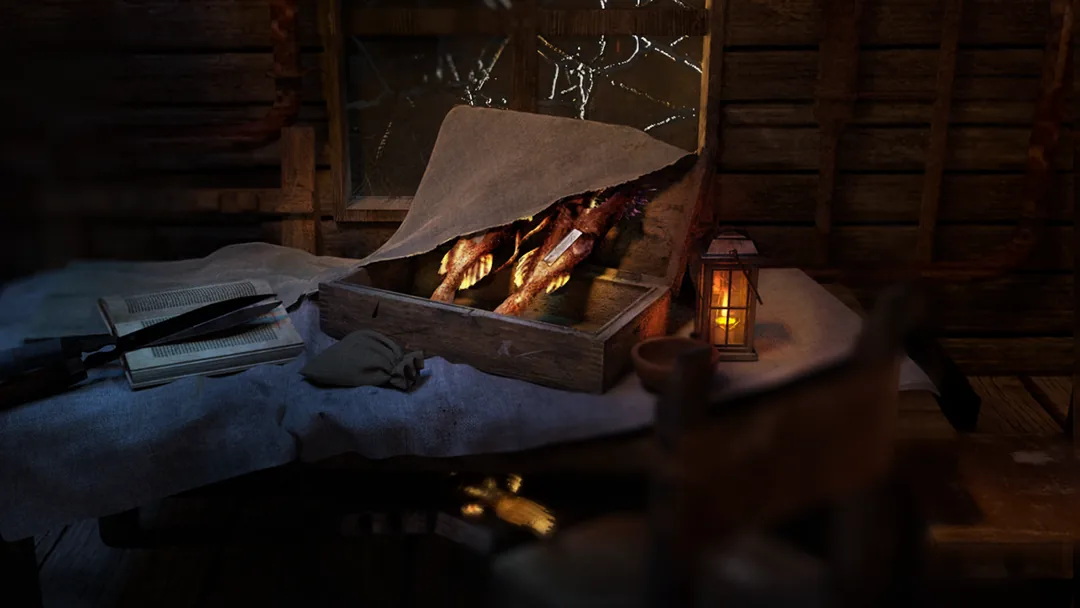
An old craftsman in the cave is maintaining two weapons. They were made for the Abyssal Hunters, but now there are no Hunters left in the sea, nor any owner left to wield them.
When the Doctor lifts the weapon, the old man turns away bitterly. "How could a landsman ever wield an Abyssal Hunter's weapon!" The true owners of that weapon are already asleep somewhere in the sea.
Somewhere in the sea, there's also a madman who believes himself a knight. He races across the waves, shouting for the sea to be slain. Civilization despises him and nature spurns him, but the Knight's head will never bow.
3. The Seaborn, and an Evolution That Cannot Stop
The Seaborn are a race that pursues nothing but survival. Since that survival is itself hardship, they evolve endlessly to overcome their flaws and stand against nature.
The new trick born of that evolution is Erosion Dust. The dust methodically breaks down cities and civilization into useless white powder, and uses it as nourishment to raise the next generation. The whole land is turning, bit by bit, into a Seaborn field.
A dried-up Seaborn corpse on the shore was clutching something tightly. The moment the Doctor touches it, a flood of images flashes through their mind.
Kin evolved in a forest over the ruins to digest metal, humans who offer food and humans who become food. And the first words the Seaborn learned after evolving their vocal organs — those were 'gift' and 'friend.'

In a certain dream, the Doctor stands among a crowd of Seaborn packed inside a sunken ship. They communicate without a sound, new limbs sprout from severed ones, and some individuals even redirect the flow of the water.
They communicate without making a sound. Neither fast nor slow, like a thousand years of ebb and flow, mournful and plaintive syllables simply flow between their exchanges, like the cadence of a poetic drama.
And then it dawns on them — that in this dream, they too are a Seaborn. Strangely, the Doctor adapts well to that identity, and the others make room, accepting them as one of their own.
Evolution. The process of surpassing every known form, on the way to the perfect answer. This is an instinct that cannot be stopped, and the only 'path' there is.
— the Many
It isn't the environment that changed them. They are the ones changing the environment. Standing before the singularity of their evolution — beings who will one day surpass this land and sea to reach somewhere new — they ask themselves a single question: "Who am I?"
Before a stone tablet assimilated by the Corrosion, the Doctor reads letters that never stop shifting. "You will either lead humanity in resisting the Seaborn, or become a Seaborn and lead your kin."
Mizuki stops the Doctor. The Corrosion is still analyzing information even now, and whatever the Doctor has read, the Many will soon know as well. And yet the tablet drags the Doctor's consciousness into a moment in time the Seaborn are about to experience.
4. The Doctor and Mizuki, into the Deep Sea
The terminal rings with nothing but bad news. Seaborn are heading for land, a punitive fleet has been wiped out, the Church of the Deep is attacking a fortress. But what worries them most are the Abyssal Hunters who entered Ægir aboard the Stultifera Navis.
The document Mizuki found laid out a plan to deceive them, lure them back into the sea, and revive them there. And another document, 'Caerula,' held the records of a bishop who spent his whole life studying the origin of the Seaborn and a single place.
There's no time to tell Rhodes Island, or their Iberian allies. The Doctor decides to infiltrate the deep sea together with Mizuki, using the secret the bishop left behind to defeat the Seaborn and save the Abyssal Hunters.
In the name 'Caerula,' the Doctor senses an inexplicable familiarity. Mizuki even tries to show the Doctor that he himself can assimilate 'its' core organ. Even so, neither of them stops walking.
The two of them keep descending, down and down, all the way to Caerula Arbor, the experimental hub seated within Terra's mantle. It's a Seaborn hatchery, and naturally, a Seaborn can become part of it too.
Where the map pointed lay a single colossal set of remains. Countless Seaborn were feeding on the endlessly regrowing wreckage, and the two of them slip through the gaps to enter a laboratory sealed away for ages.
Not even Mizuki could open the tightly sealed gate. But the moment the security system caught sight of the Doctor's face, the lock released on its own. This strange laboratory in the deep sea had recognized the Doctor as 'authorized personnel.'
In the middle of a garden, a colossal tree rose up, its branches stretching out beyond the laboratory itself. Mizuki says this is 'its' core organ — a tree that is, in theory, dead, yet still grows on survival instinct alone, feeding the Many.
The moment Mizuki touches the bark, he's slowly drawn into the tree. Before long, 'it' awakens, and the entire laboratory trembles with that revival.
Ishar'mla, I, stop it.
— Caerula Arbor
These remains are the very 'Firstborn' that swallowed its own birthplace. Only a Seaborn can assimilate with it, and only a human can understand the sorrow held within it. Mizuki means to become one of the Seaborn through that body.
The bishop's ultimate wish was to fuse humanity and the Seaborn, evolving them into a stronger form of life. To him, the Seaborn were nothing but a means to an end. To tear down that scheme from the inside, Mizuki climbs onto the experiment table himself.
After sending Mizuki into the transfer chamber, the Doctor heads for the main console. This is an automated process that takes an extremely long time. A hundred years? A thousand? Not a single figure shows on the console.
Outside the glass, stem-like tendrils endlessly stretch and contract, drawing energy from the magma, and part of the experimental hub's structure had already been completely assimilated.
The Doctor could have stopped this dangerous experimental process. But if they choose not to stop it, only one thing remains: to stay by Mizuki's side until his life comes to its end within this experimental hub.
Beside its dwelling lay a pristine area the Seaborn's touch had never reached. There was nothing there but a broken statue, and two beautiful women asleep with weapons still clutched in their hands. Right up to the final moment, the Abyssal Hunters had slept in the shape of humans, not Seaborn.
Even after the Doctor leaves, the Seaborn never encroach on that place. Their kind doesn't even remember what the Abyssal Hunters looked like, but they know, at least, that they must never enter there. Forever.
One day, while wandering the deep sea, the Doctor comes across a half-human, half-Seaborn mutant. Its badly wounded body still had scraps of a missionary's uniform draped over it.
The Doctor suddenly recalls a missionary they'd met before, who'd said he was heading back to Iberia. Hoping this creature won't die alone and without dignity, the Doctor sends its remains back to the sea instead of leaving it in the pitch-black cave.
Even just recalling the laboratory's research sends a chill down your spine. Perhaps, in order to survive that era, someone who held the same status as the Doctor once did something unforgivable. Caerula Arbor, holding even that memory within itself, is still growing toward the planet's core even now.
5. Precious Everyday Life
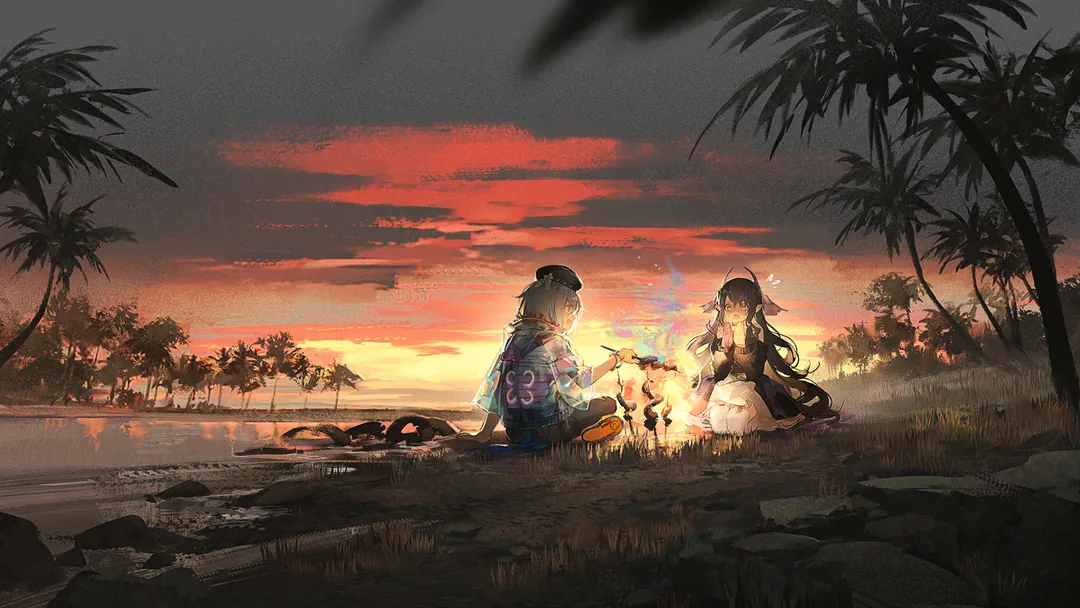
The goal set at departure is fulfilled at the journey's end. That being, poised between Seaborn and human, finishes a delicious meal and prepares to greet one more tomorrow.
The everyday is the greatest kindness fate grants to any living thing. This ending quietly tells us that the ordinary is itself a joy.
6. An Age of Silence
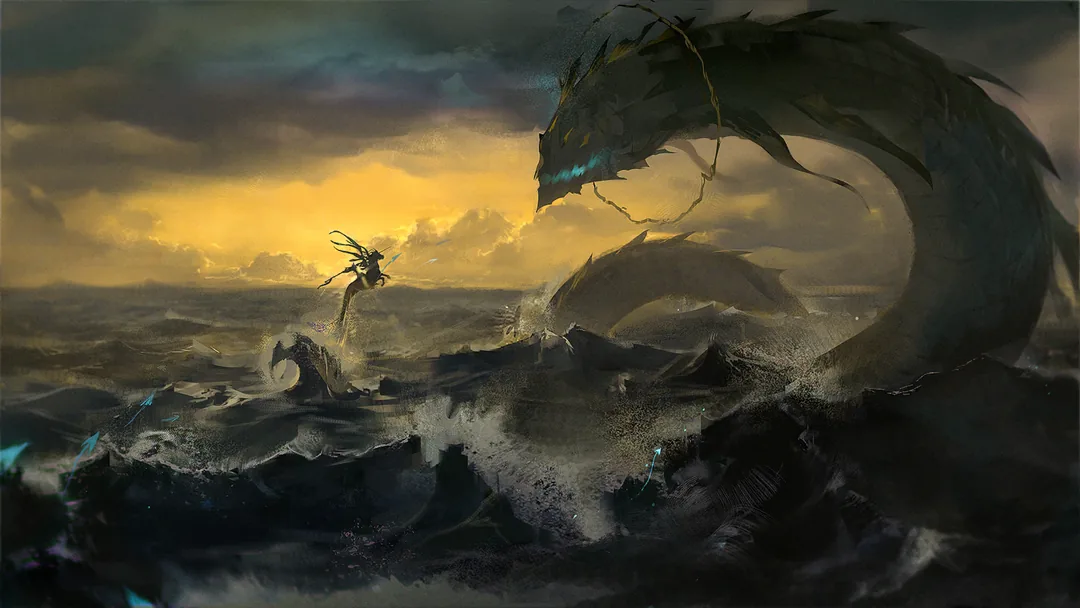
A soundless wave rises high. The Knight who made the sea his enemy roars out in fury, but even that cry vanishes into the silence.
The catastrophe that destroyed Iberia, the Profound Silence, returns once more. And this time, it will never go away again.
7. The Price of Peace
The conflict surrounding the 'Firstborn' reaches a resolution. The one that was human has beaten the one that wasn't. The Profound Silence recedes, and the waves grow calm.
But as the price for that, Mizuki can no longer return to land. And beneath the waves, an undercurrent still stirs — as the 'Firstborn's' blood guides Skadi toward the Many.
8. Stella Caerula
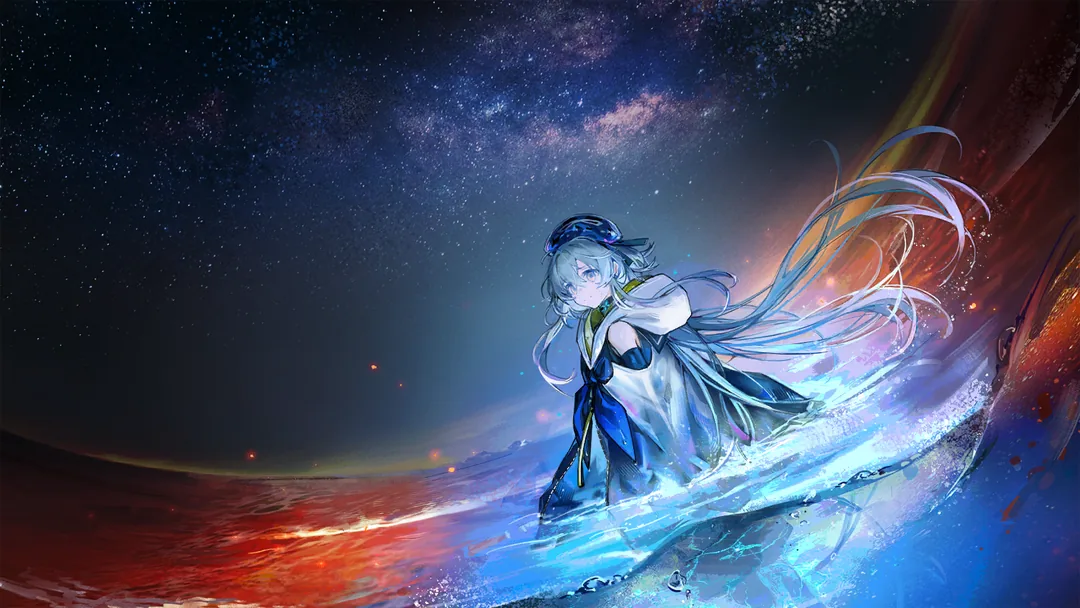
The heir of evolution rises up from Terra's waves. Piercing the clouds, it presses onward into an endless sea of stars.
Now there is no more hardship left in the world, only the joy of a new life. The age of humans has ended, and the age of the Seaborn is soon to come.
9. Who Am I
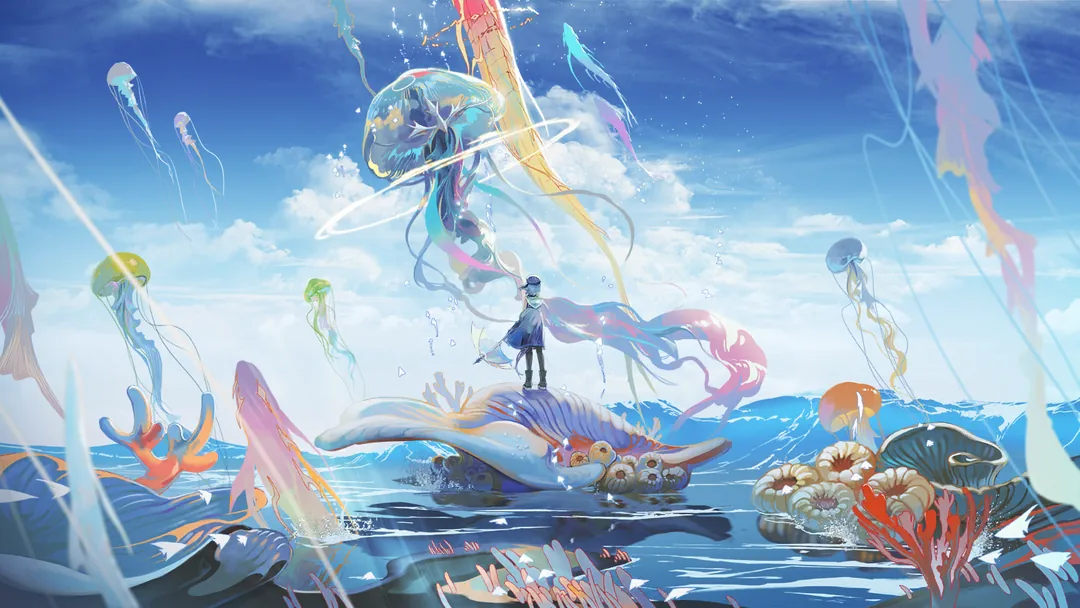
Four seas mean four answers. Mizuki sometimes remains human, sometimes becomes a Seaborn, and sometimes leads his kin soaring up into the starry sky.
This race pursues nothing but survival, and survival itself is hardship. So they evolve without end, believing there is no problem repetition cannot solve, no wall evolution cannot break down. When the time comes, they say, the answer appears on its own.
Mizuki's human light has not faded, even now. Since he accepted the Seaborn as a human, some believe he will surely find his way back from Seaborn to human again.
But Mizuki himself is neither human nor Seaborn. He's simply doing what he believes to be right.
The Many is not me, but I am the Many.
— Mizuki
The wind blows past your shoulder, heading toward the far side of the sea. The sea of Integrated Strategies changes its course and order each time, stirring up its waves anew, and each time, the Doctor and Mizuki pack their things again and descend into the deep sea — searching for the answer to "who am I" in this sea, and in the next one after that.