
Integrated Strategies is a mode where you explore a stage that's freshly assembled each time you play. So rather than a fixed plot, the backbone of the story here is the setting itself and the one truth that keeps repeating on that stage. And the name of this particular stage is none other than 'the Garden.'
Near Baizhao, in a place blessed with fine mountains and clear water, stands an attraction that never runs short of visitors. But one day, this place clears out its guests and locks down under tight security.
At last, the Pacification Rite begins in earnest. With the Four Generations' approval, the Doctor and the operators step deep into this strange tourist spot.
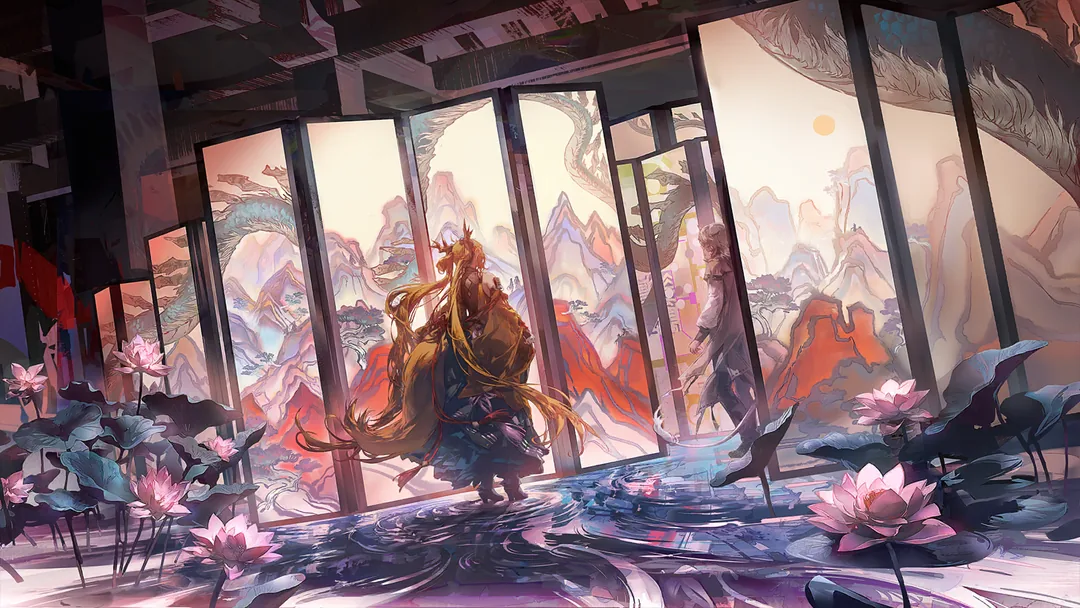
1. By Day a Tourist Spot, by Night an Altar
The Garden gathers all of Yan's finest scenery into one place — waterfall-draped foothills, treacherous cliffside paths, and a rock mountain built from bizarre, jagged stones. Every kind of scenic wonder is packed in.
Tourists burn incense and pray for luck, stamp their passports, and buy souvenirs. By day, the Garden is as peaceful as any ordinary amusement park.
Except the stamps are a little strange. Each time one is pressed, the character on it shifts to follow the flow of feng shui across the land — yet no one actually knows what that character means. Like a footnote whose original text has vanished.
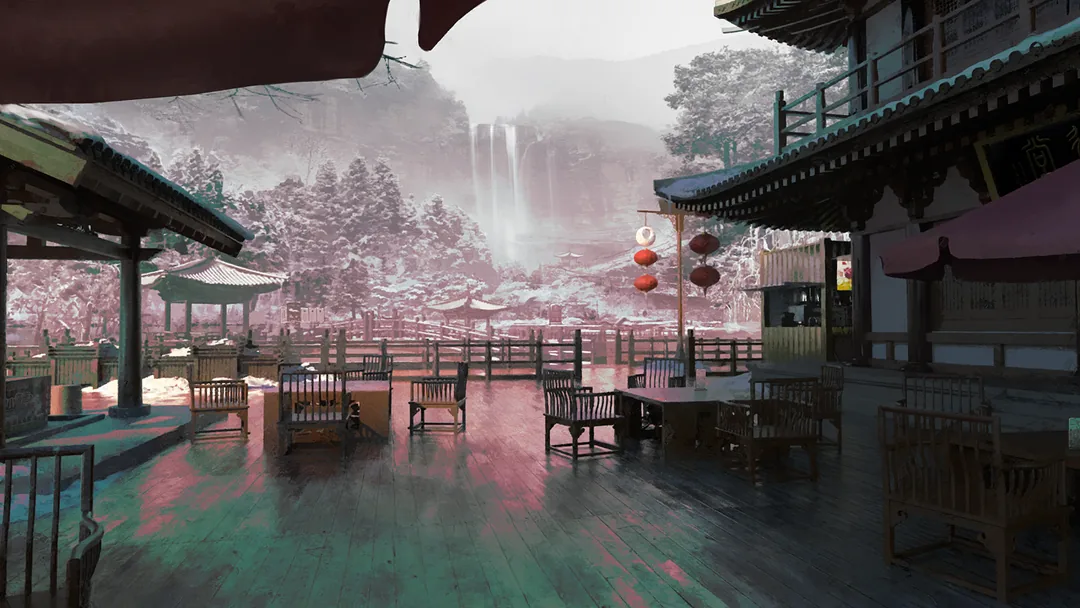
But once business closes, the Garden reveals an entirely different face. Staff who were tour guides, gardeners, and security guards become lantern-keepers and candle-keepers.
They watch over the uncanny, record any changes, and guide the grotesqueries wandering the Garden by night. Every one of these human staff actually belongs to an organization called the Four Generations.
The Four Generations' roots run very deep. The organization arose from survivors of an ancient war against a Behemoth, who passed their experience and skills down through later generations.
2. Those Who Light the Candles
Near the Garden's entrance stands a candlelit shrine. By day it's where tourists burn incense, but once business closes, it becomes the headquarters from which the Four Generations manage the Garden.
Beneath the light of candles gathered from every corner of Yan, the Candlebearers each light their own candle and recall their duty. They have come to carry out the Pacification Rite.
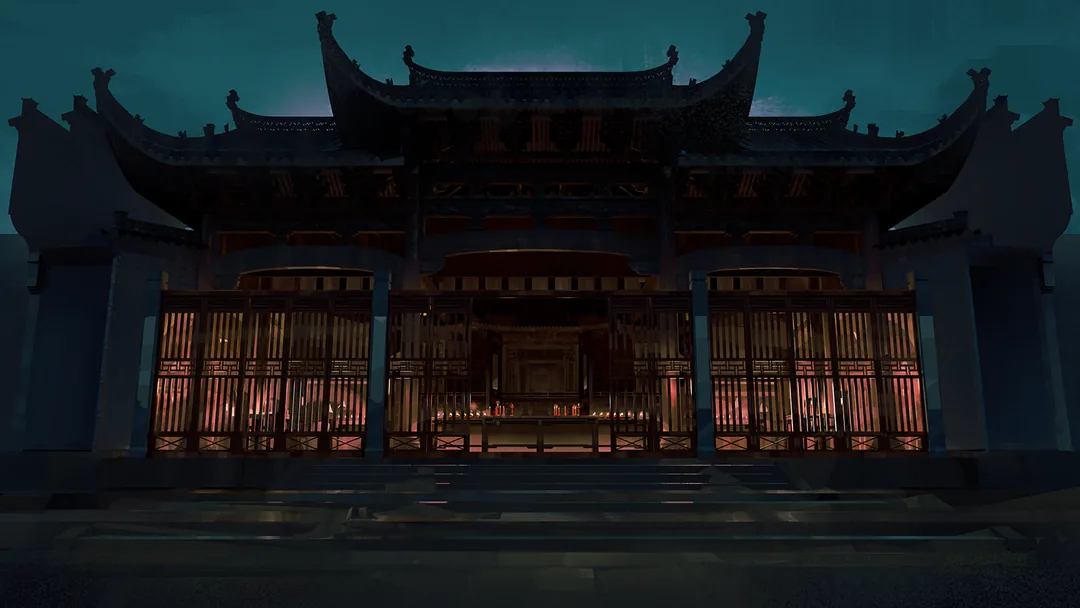
The Pacification Rite is a ceremony repeated every year. It means entering the Garden, establishing authority in Sui's name to subdue him, and soothing him through thought.
Through battle with Sui's Emissaries, human authority is driven through the Garden straight into Sui's vital point. The Candlebearer's duty is passed down generation after generation.
Not even fierce beasts can hunt the Fowlbeast of the sky, so how could a human possibly harm the master of the Garden? And yet, repeating this ritual carries its own meaning all the same.
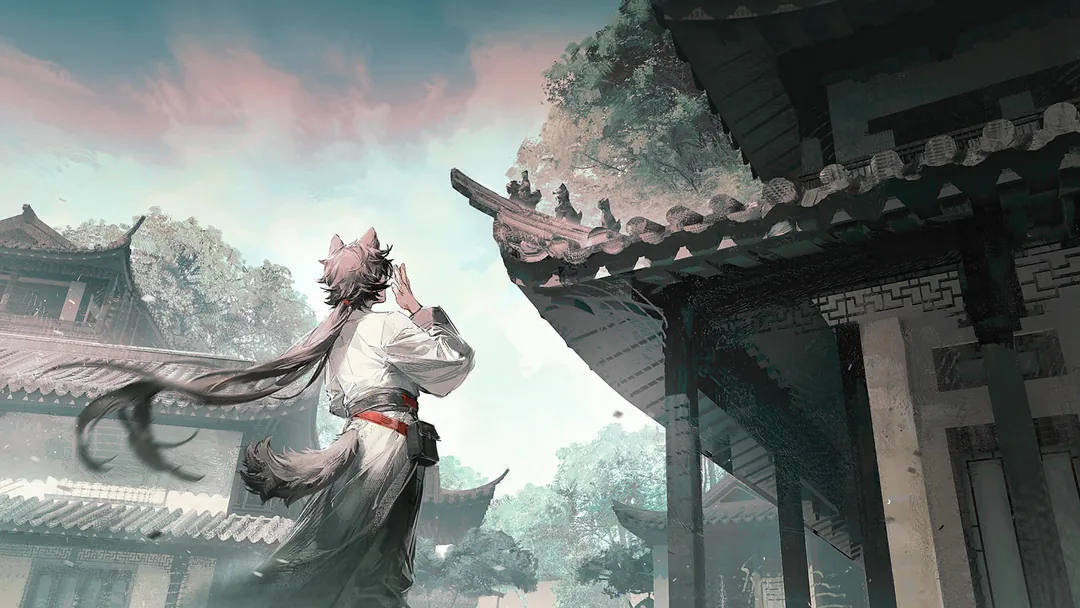
But what exactly is being subdued? Beneath the Garden's mountains, waters, and buildings, something has lain sleeping since long, long ago.
3. Sui, the Sleeping Old God
Sui is an ancient, colossal Behemoth unchanged since time immemorial. His form is majestic, and Sui's Mausoleum, the deepest place in the Garden, is his very body.
Long ago, godlike beings walked this land, and humans joined forces with Behemoths to hunt them down. That was the age of the Great Hunt.
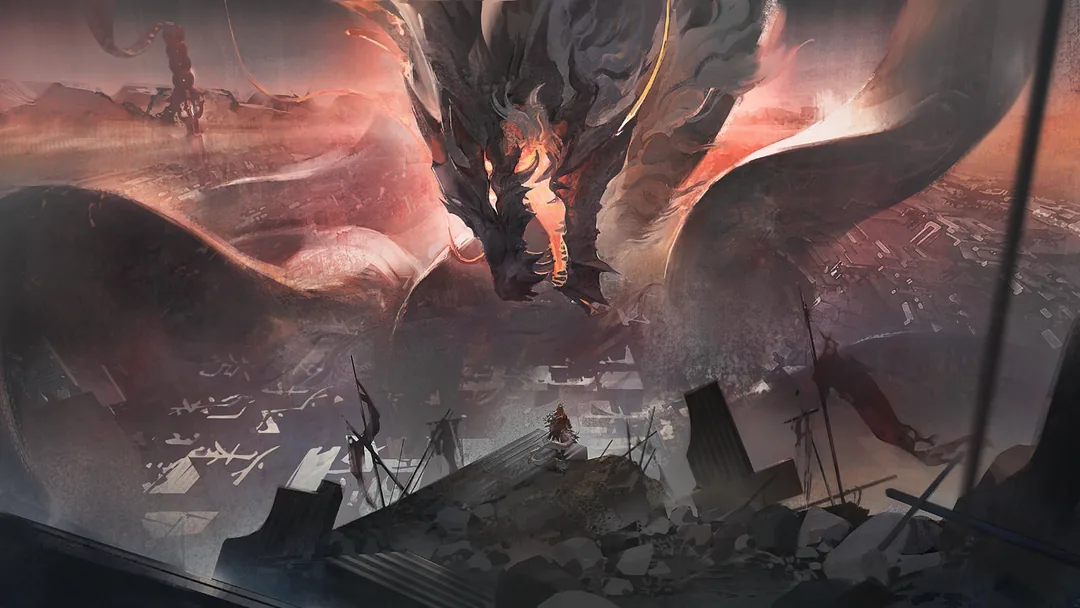
In those days, countless households handed over half their fortune to the court, sometimes all of it. Fathers and sons stood shoulder to shoulder, mothers and daughters lined up together, all trying to shake a being that seemed like a god.
Not a single soul from those countless households survived. The coins that had been their share were melted down together into the Martyrs' Memorial of Baizhao.
The fireworks launched into the sky from the Garden every year-end were originally a custom of mourning that grim, costly victory. Mourning turned into remembrance, and remembrance into celebration — only the meaning changed, never the custom itself.
Sui did not die — he sleeps. Even in that sleep, he refuses to let his body be trampled, and will not allow his memories and thoughts to be disturbed.
Every time Sui stirs toward waking, crystals of rage sprout like thorns, watching for a chance to break the human heart. The Garden is nothing less than a colossal apparatus built to prevent that awakening.
The grotesqueries wandering the Garden at night are objects that have taken on a spirit under Sui's influence. Stand beside a suppression pillar and the five senses fall away as consciousness expands — just like that ancient Behemoth looking down upon the earth from above the clouds.
Magil, a teacher at the academy, instructs these grotesqueries in how to live as people. He tells them that Sui's influence is merely the condition for becoming a grotesquerie — whether one actually becomes one is a matter of each individual's nature and choice.
4. When the Coin Falls to Earth, Heaven and Earth Shall Change
The Garden by night is full of stories steeped in human years. And every one of those stories begins, without exception, with a single coin.
The rock mountain built from Guwu stone is also called 'Old Man Stone' or 'the Stone God of Fortune.' A pagoda crowns its head and untold wealth wraps its waist; struck day after day, it never grows angry, and simply wishes good fortune upon everyone.
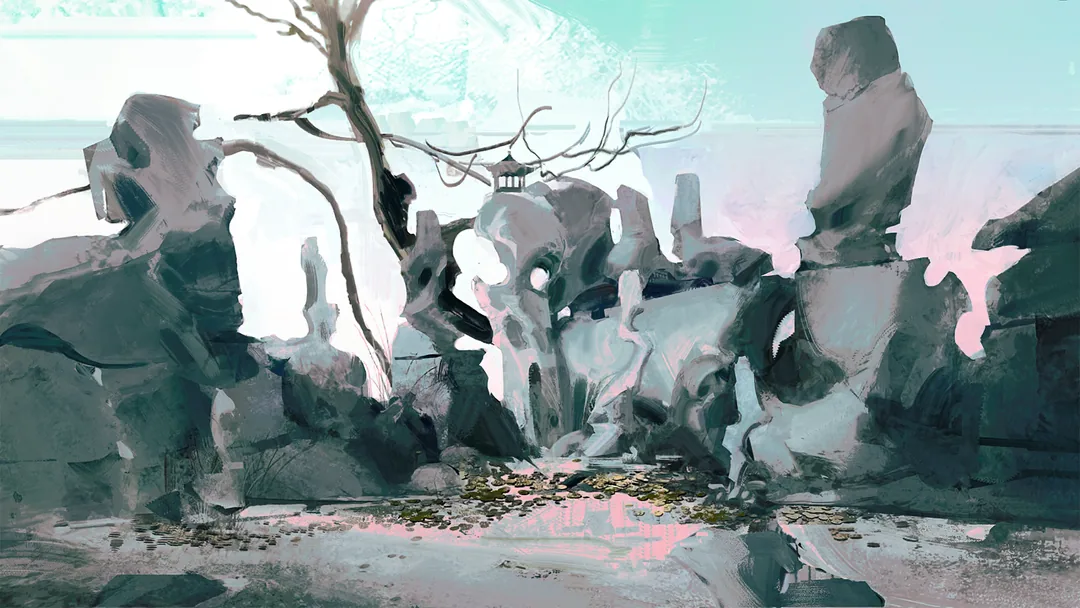
Throw a coin, and the passage of time transforms it. A coin falls to the ground and becomes a shrine, becomes an academy, opens up a whole new world. Human years lie hidden in every single coin.
All across the Garden wander those who carry their own tragedy and turmoil. There is a pair of lovers trapped in a spinning bridal chamber split in two, who have lived over eighty years separated by a single wall. Once able to meet for only a single day every ten years, they now wish for nothing but to be together.
There is also the orchard of a farmer who, murdered by his landlord, now tills the field himself, and the amber of the Eastern Sea, which burns and weeps in a repeating four-hundred-year cycle. Each of them is bound fast by the years, lonely things with nowhere left to go but this Garden.
The little village of 'Innocence' inside a crystal ball is chillier still. Villagers who fled war and prayed for an eternal paradise now live trapped inside that orb for generations, by the grace of a 'god.' As long as they never wish to leave, the orb 'protects' them forever.
And then there's foolish laughter too — a duck calling itself 'Duck Lord' who won't stop hyping its 'Garden Paradise' business venture, a chain restaurant called 'Boss Bob's' supposedly opened by a Westerner, and even Jarak, who tries to solicit investment from the grotesqueries.
The Corridor of Greed makes you want more coins the moment you pick up just one. That endlessly swelling desire is exactly the meal this corridor enjoys most.
5. The Twelve Emissaries
The true masters of the Garden are Sui's Emissaries — twelve Behemoth gods awakened from Sui's own thoughts, each ruling over one domain.
Red-horned Nian is a gambler who stakes her life on a single round of mahjong. "We're one player short, hurry up! Fair warning, the stakes are pretty high — that's what makes it fun." If she loses, she sweeps the table clean with her tail.
Ling, who tips back wine cups like a waterfall, invites you to test your luck by tossing coins; Shu, who wraps around the fields, takes people's wishes as seeds and harvests them into every kind of fruit. Chongyue stands alongside them, urging on martial valor.
Among them, the master of the Garden is Yi. A skilled craftsman, he's also known as 'Master Yi,' who loses all resistance the moment a fine item is put in front of him. Show him something he likes, and he is never stingy in return.
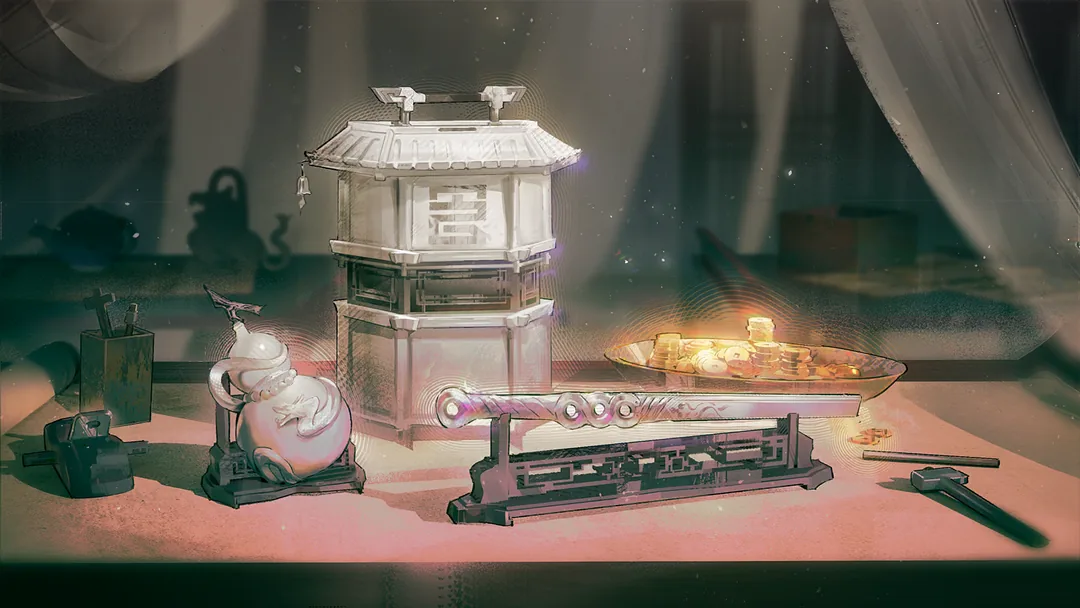
Yi's younger sibling Zhi is a merchant who's always bickering with his brother over how to split the profits. From a wandering young physician who heals wounds, to a taciturn law official, to a painter who lives only inside their own painting — each Emissary has a personality all their own.
The painter Emissary, who splashes ink and sweeps the brush, lives only within their own painting. They scowl at the Doctor, who intrudes into the painting like an unwelcome guest, but upon recognizing a token left behind for Yan's elders, they reluctantly see the matter through to its end.
The Doctor borrows the power of these Emissaries to paint Sui's form, stroke by stroke. Like the finishing touch that brings a painted dragon to life, each added stroke draws a little closer to the sleeping Sui's body and mind. To subdue a sleeping god, one must first render that god whole.
And among those twelve, there is one whose very name the years have erased. Like a shrine whose plaque cannot bear even a single carved character, this Emissary has had their entire existence wiped clean. Such an erasure is nothing a human hand could ever accomplish.
6. The Bridge to the Remnant
The Envoy Bureau masters a technique called Ascension. When a candle burns without flickering, consciousness can slip free of the body and enter the Remnant — a world formed from Sui's own lingering consciousness.
Within the Remnant remain the war camps of the Great Hunt, the last memories of humans and Behemoths who once fought shoulder to shoulder. Shake those memories, and Sui in the waking world might shake too.
Ryua of the Curiosity Workshop is an inventor who studies the Remnant and the coins alike. A petal-shaped shadow occasionally flickers behind her back — it is an afterimage of her own future self.
The Four Generations hold one unspoken rule: face your own illusion, and the future becomes fixed fact. So the shadow only signals for silence, straightens the collar of her past self, Ryua, and then scatters away.
Step across the border of the Remnant and it's easy to lose all sense of what is real and what is not. The vivid sensation that the mausoleum is Sui's very flesh, the ancient war camp stretching for a hundred li, and the shimmering illusion of a Behemoth far in the distance — all of it leaves a person adrift.
In that final memory within the Remnant, a single scout keeps looking back. Where he looks, Sui is there, his shadow swallowing the camp and those about to set out. The scout hurries to break free of that shadow.
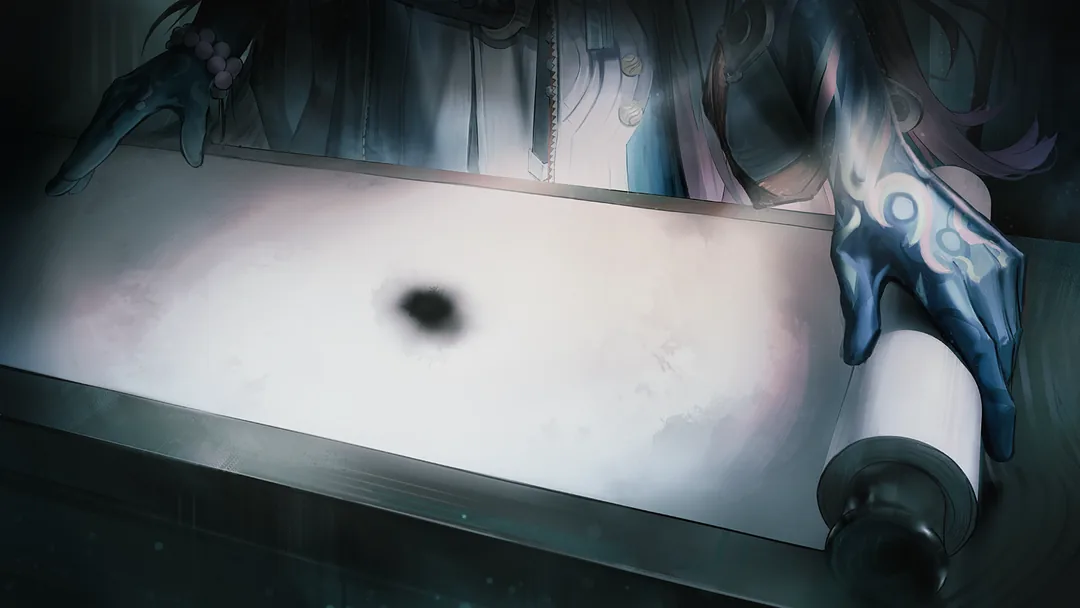
Every exploration the Doctor has carried out in the Garden turns into ink and gathers onto a single scroll. This accumulated trace is enough to reveal the secrets of the Garden and Sui's Mausoleum — and enough, further still, to awaken an unfinished relic.
7. Wang's Go Board
Somewhere in the Garden sits a game of Go that has only just begun — a match left behind by Wang, one whose depths even Ryua, for all her long study, could never fully grasp.
Wang is also one of Sui's Emissaries. A being who sees in every direction, he holds black and white, right and wrong, all within a single hand-span of board. And the opponent he has chosen is none other than the Doctor.
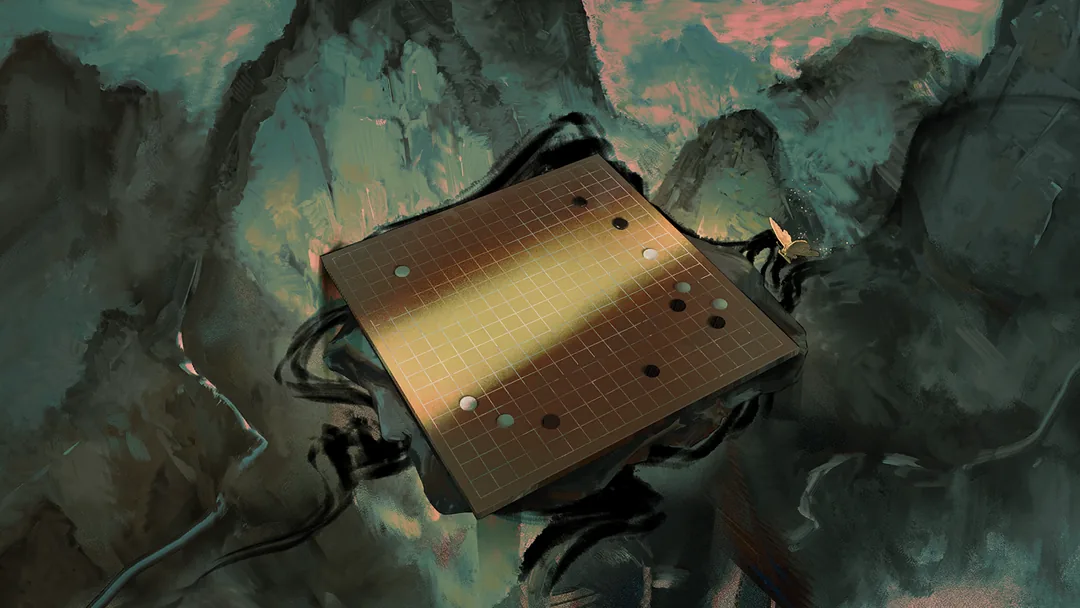
Is the Doctor meant to play on a board already rigged in advance? The moment the Doctor flips the board without hesitation, it spins in midair and transforms into a printing plate of movable type, with the character for 'Sui' set right at its center.
A thought that never reaches a solid character becomes chaos; an ideal never carried into action is nothing but empty fantasy. With the Go board as heaven and the printing plate as earth, an entrance takes shape just outside the mausoleum's gate.
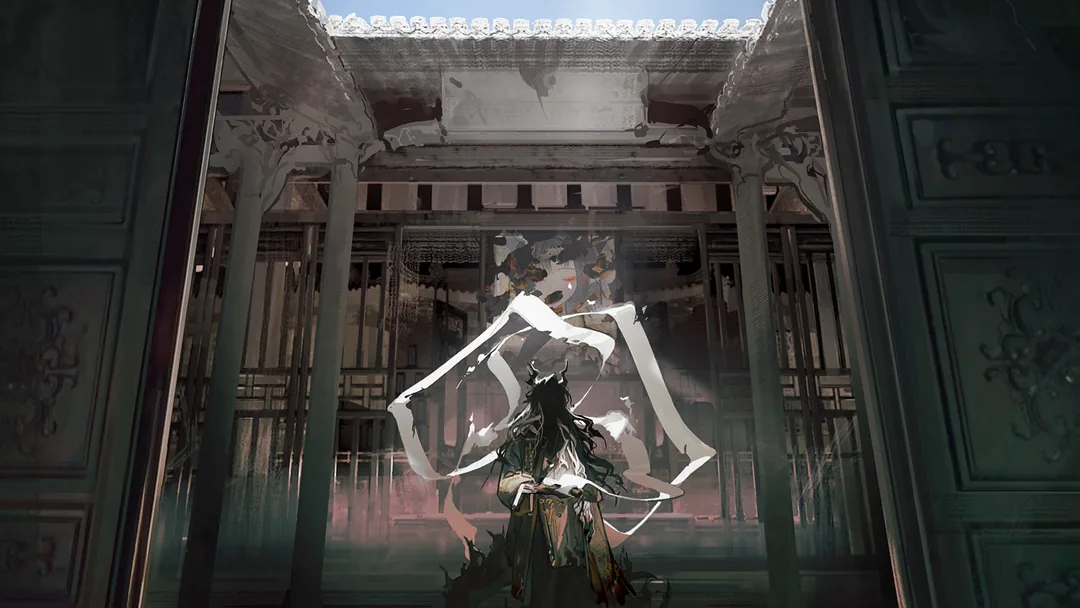
Sui's awakening carries countless variables in tow, so Wang had to prepare a way to meet every one of those changes. Having already placed humans as pieces on his board, he bears the duty of preparing the surest possible plan for their sake.
It was Wang who devised the scheme, but it is humans who see it through. Now, what remains is up to you.
— Wang
8. Five Endings — the Close of the Pacification Rite
Depending on which trials the Doctor passes through and which truths they touch, this recurring ritual closes with one of five different endings.
Pacification by the Rites (依法鎭武) — the most orthodox ending. It closes with the ancient guardian beasts, the Monkey Guardian and the Rat Guardian, subdued, and the rite completed exactly as tradition demands.
The Garden's Pacification Rite goes on year after year, and the Candlebearer's duty passes down generation after generation. This finely honed blade, just like the Garden itself, holds Sui firmly in check. Nothing changes at all, and the world simply lives out one more day.
A Scroll's Lingering Trace (掌卷遺痕) — with one missing from the twelve, things can never be complete. This ending follows the trail left by that erased Emissary.
What was seen at the shrine may have vanished, but one thing is certain — she herself has not vanished yet. Through a scroll steeped in ink, someone may yet reveal that erased past again, someday.
The Emissary who lost her name remains, then, not as a name but as a trace — like a set of twelve cups that is only complete when exactly one of them stands empty.
The Mystery of Black and White (黑白玄妙) — it was humans who drew the Pacification Rite into Sui's Mausoleum, but in the end, this ending is one that Wang led them toward.
Just as though he were playing Go. Black and white, right and wrong, all tangled together on a single board. Just when will this vast match he has set in motion ever end? The Doctor, it turns out, had already stepped inside Wang's board.
Sui has no interest whatsoever in the clarity of right and wrong. No matter how cleverly the world is rearranged, only by winning Sui's favor can one set foot in that mausoleum. And Wang had already calculated even that favor as one more move on the board.
Something from Nothing (無中生有) — an ending in which something is born where nothing was before. The unfinished relic that the Garden's master, Yi, had long kept watch over, is at last completed by human hands.
The Doctor witnessed a fragment of the Great Hunt within the Remnant, and a faint trace of ink spreads across a scroll bearing not a single character. With this, characters are formed, books are written, and learning itself is established. And so, both grotesqueries and people alike can, at last, become truly human.
The thin barrier that had stood between reality and Sui's Remnant shatters, in that very instant.
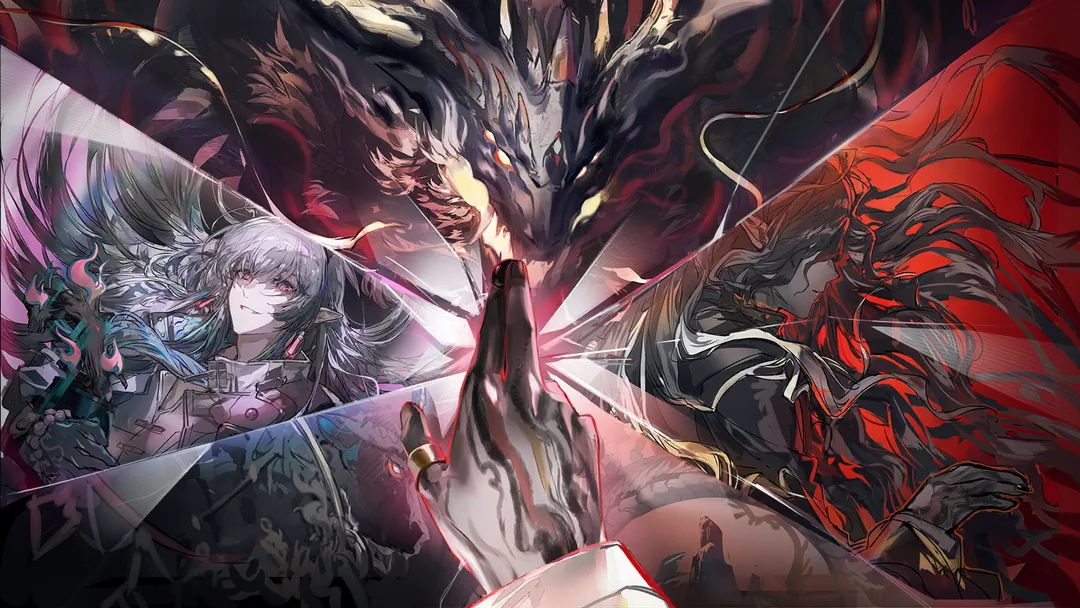
No Retracting the Play (落張不入) — the hidden, true ending. This is the one where a human carries an Emissary's future out beyond Sui's Mausoleum.
At that, Wang gives his all, becoming able to shatter every one of Sui's delusions within a finite infinity. Under Wang's scheme, the Doctor cleaves through Sui's rebirth, extinguishing even the flames of Yan and the illusions of the Emissaries.
A ritual that had only ever put a sleeping old god back to sleep advances, for the first time, all the way to ending that god for good. Of course, even that was likely just one more stone Wang had laid down long, long ago.
Whichever ending the ritual closes with, the Garden opens its doors again each time, shuffling its zones and its order anew. Someone who entered as a daytime tourist becomes, before they know it, a nighttime Candlebearer, and the sleeping god waits once more beneath the mausoleum for the moment of awakening.
The Garden, blessed with fine mountains and clear water, still welcomes tourists by day and lights its candles by night. The twelve Emissaries each hold their guests with their own games, and the sleeping Sui waits beneath the mausoleum only for the moment he wakes. And with both the opening and closing moves still left to Wang, just when this vast match will end is put off to the next Pacification Rite, and the one after that, and the one after that.